Why Is My Car Insurance So High? What Actually Drives the Price
A new driver's premium is not random. Five factors determine what you pay, and one of them is under your control before you choose the car. Here's how the pricing actually works.

You found the car. You checked the price. Then you asked for an insurance estimate and the number was bigger than you expected.
This is not a glitch or a fluke. It is how new driver pricing works, and understanding the logic behind it is the first step to doing something about it.
Five things that set the price
1. Your age and how long you have held your licence
New drivers statistically have a higher claim rate in the first two years on the road. Insurers price for that. At 17 the premium is highest; it falls as you build a claim-free record. This is the single biggest factor, and the only one you cannot change in the short term.
2. The car's insurance group
Every car sold in the UK is assigned a group from 1 to 50. Group 1 cars are the cheapest to repair, replace and insure. Group 50 cars are the most expensive. The same driver in a group 1 car will pay materially less than in a group 20 car. This is the factor you can control before you buy.
3. Where you live and where you park overnight
Insurers map claims data by postcode. Some areas carry a higher statistical risk, and the premium reflects it. Declaring off-road overnight parking also reduces the price compared to parking on the street.
4. How you use the car and who insures it
Annual mileage, whether the car is used for commuting, and whether you are the main driver or a named driver on a parent's policy all move the price. Lower mileage and non-commute use tend to reduce it.
5. Your driving record
Penalty points, convictions and at-fault claims raise the premium significantly. For a brand new driver this is not yet relevant, but it becomes the single biggest ongoing variable once you are on the road.
Why prices can vary so much for the same driver
A new driver checking the same car on three comparison sites can see a wide spread of prices for identical cover. This is not a mistake.
Insurers use their own models to assess risk. Some specialise in new drivers and price them more competitively. Others apply a high loading across the board and are not worth using for a first policy. The comparison site is not setting the price; it is collecting prices from dozens of insurers who each arrive at a different number using different assumptions.
The spread can be significant. The same driver and car can attract a difference of hundreds of pounds between the lowest and highest price on a single comparison site. Always compare across more than one.
The one factor you control before you buy
Age, address and driving record are largely fixed for a new driver. The insurance group of the car is not.
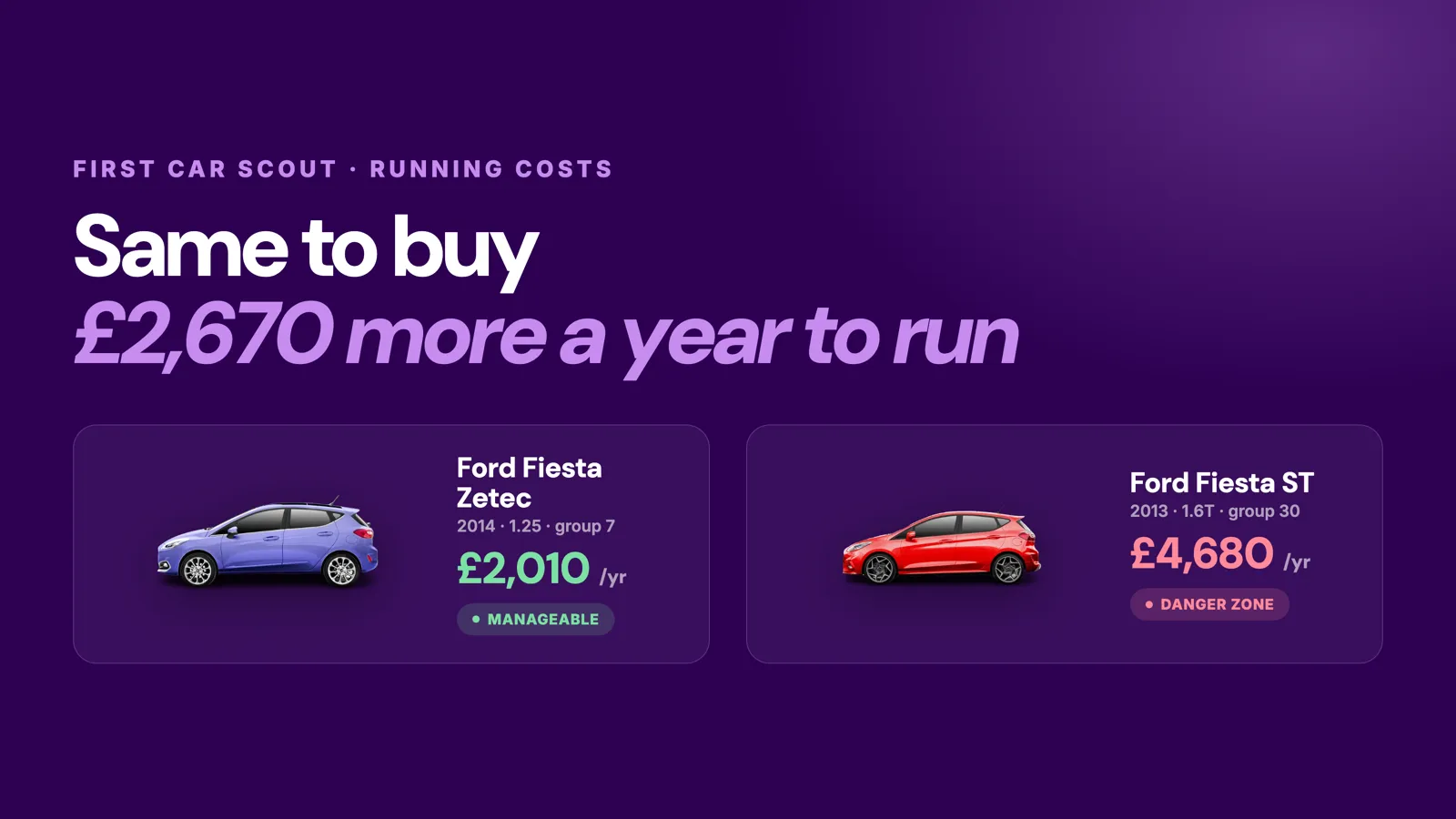
Choosing a car in group 1 to 10 rather than group 20 to 30 can reduce the annual premium by several hundred pounds. Not because you found a better insurer, but because you chose a different car. That decision is made at the search stage, before you have fallen for a specific vehicle.
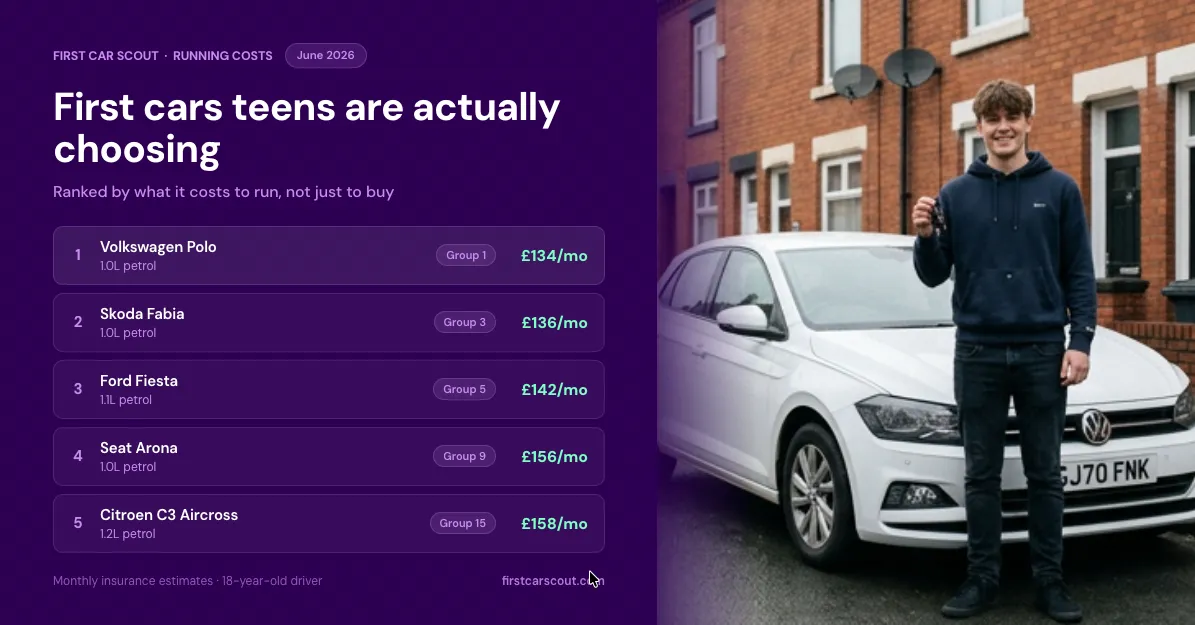
Our cheapest cars to insure for new drivers guide ranks the models where the group is lowest, with the full monthly running cost alongside so you can see how the total adds up.
Named driver or your own policy?
Adding a new driver as a named driver on an existing household policy is often cheaper in the first year than a standalone policy. This is legitimate: if the experienced driver is genuinely the main driver and the new driver uses the car less, named driver status reflects the actual risk.
What is not legitimate is listing yourself as a named driver when you are actually the main driver, in order to get a lower price. That is called fronting. It invalidates the policy and, in a claim, leaves you uninsured.
Whether named driver or standalone is better depends on your household. Both are worth pricing, and the gap closes as the new driver builds their own no-claims record.
Does a black box help?
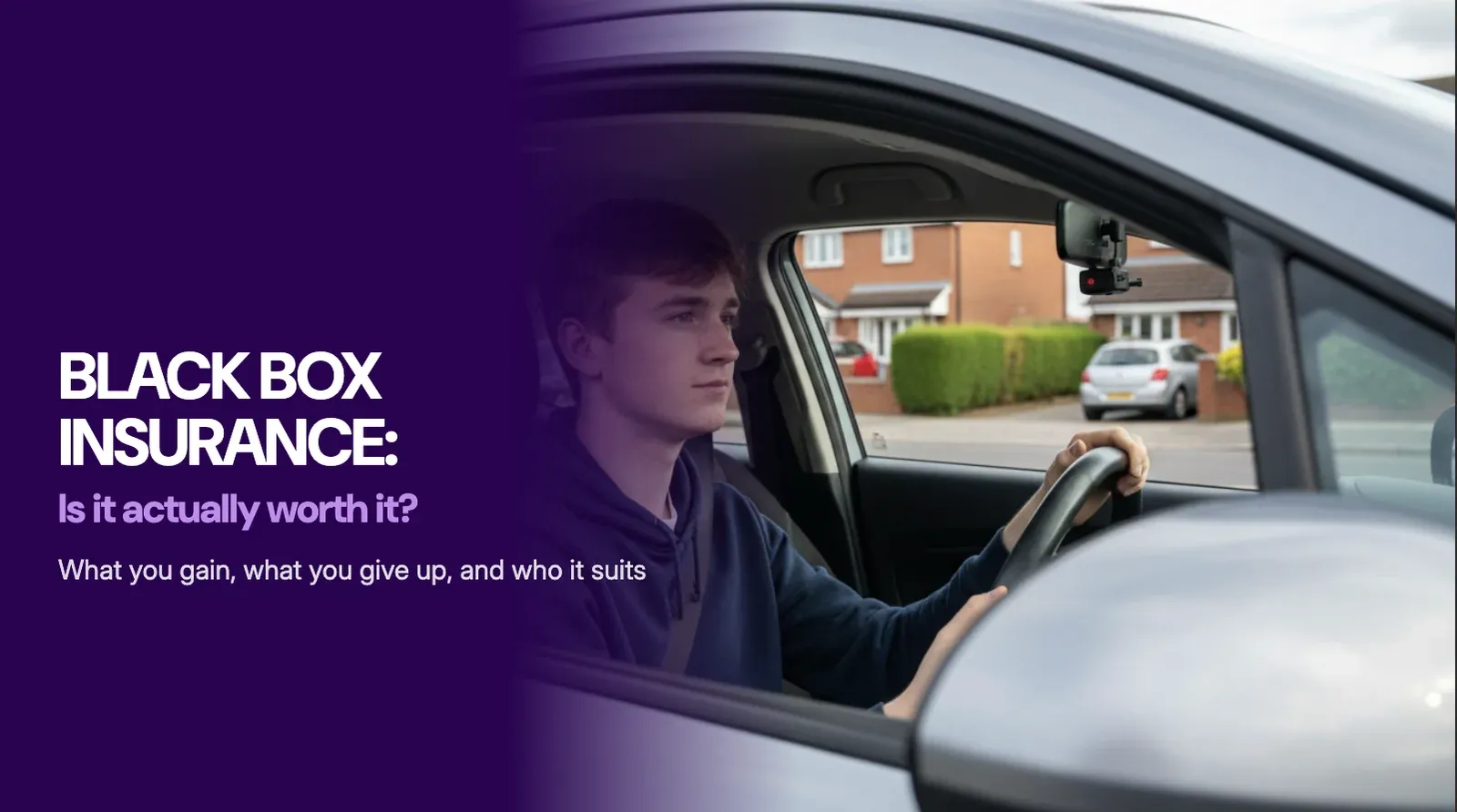
A telematics policy (usually called a black box) records how you drive. For a new driver with no claims history, a telematics policy typically starts cheaper than a standard one, and can go down at renewal if the driving data is good.
The saving is a discount applied on top of whatever the base rate is for that car’s insurance group. A black box in a group 30 car will still cost more than a black box in a group 5 car. The group comes first; the box is a modifier on it.
We have a full guide on whether a telematics policy is right for your situation: Black box insurance for young drivers: is it actually worth it?
Frequently asked questions
Why is car insurance so expensive for new drivers?
Insurers price based on statistical claim rates. New drivers, particularly under 25, are involved in more claims in their first two years on the road. The premium reflects that risk profile. It falls as you build a claim-free record and move into a lower-risk age band.
Why did I get a much lower price on one comparison site than another?
Comparison sites collect prices from different sets of insurers. Some insurers specialise in new drivers and price them competitively. Others apply a blanket loading and are not competitive for this type of driver. The site is not setting the price; it is showing you what different insurers have calculated. Always check more than one comparison site.
Does my job affect my car insurance?
Yes. Occupation is one of the inputs insurers use. Some job descriptions carry a lower statistical risk than others. It is worth checking whether a different accurate description of your work changes the price. What matters is that the description is accurate: misrepresenting your occupation to get a lower price invalidates the policy.
Can I lower my premium by adding a parent to the policy?
Adding an experienced driver with a long no-claims history as a named driver can reduce the price on some policies. The reduction reflects the fact that an experienced driver shares use of the car. The main driver must be the genuine main driver: adding a parent as the listed main driver when the new driver uses the car most often is fronting, which is fraud and voids cover.
How much does the car’s insurance group actually matter?
Significantly. Moving from a group 20 car to a group 5 car, with the same driver, same postcode and same level of cover, can reduce the annual premium by several hundred pounds. The group is set by the car’s repair cost, replacement value, performance and security features. Checking the group before shortlisting a car is one of the most effective steps a new driver can take.
Will a black box make my insurance cheaper?
A telematics policy typically starts cheaper than a standard policy for a new driver, and can reduce further at renewal if the driving data is good. The saving is a discount on the base price for that car’s insurance group. Starting in a low-group car means the discount lands on a lower baseline, which tends to produce the best outcome overall.