Affordable to Buy, Expensive to Run
A first car can look affordable to buy and still be the expensive choice once running costs, fuel, servicing and reliability are in. Here's how to spot the trap before you commit.
A first car can look affordable at first glance, then get expensive fast once you add the real running costs. That is the trap: families often compare sticker prices, but the purchase price is only one part of the decision.
Why this matters
First-time buyers and parents usually start with the same question: what can we afford to buy?
The better question is: what can we afford to own?
A car that looks sensible on the listing can still become the expensive choice if fuel, servicing and other ownership costs are much higher than expected.
The key things to know
1. Purchase price is only the start
Two cars can sit at a similar asking price and still have very different ownership costs. Comparing cars by the advert price alone is how you end up with a bad shortlist.
2. Insurance is usually the biggest cost
For a young driver, insurance is often the single biggest expense, and it swings hugely with the car's insurance group. The same model in a low group rather than a high one can mean a difference of thousands a year.
3. Running costs change the picture
Fuel, servicing, road tax, MOTs, repairs and depreciation all add up. Some first cars are affordable to buy but costly to keep on the road.
4. Reliability affects the whole year
A car that needs frequent fixes gets expensive quickly. A slightly dearer car with a stronger reliability record is often the better value over time.
Same price. Different outcome
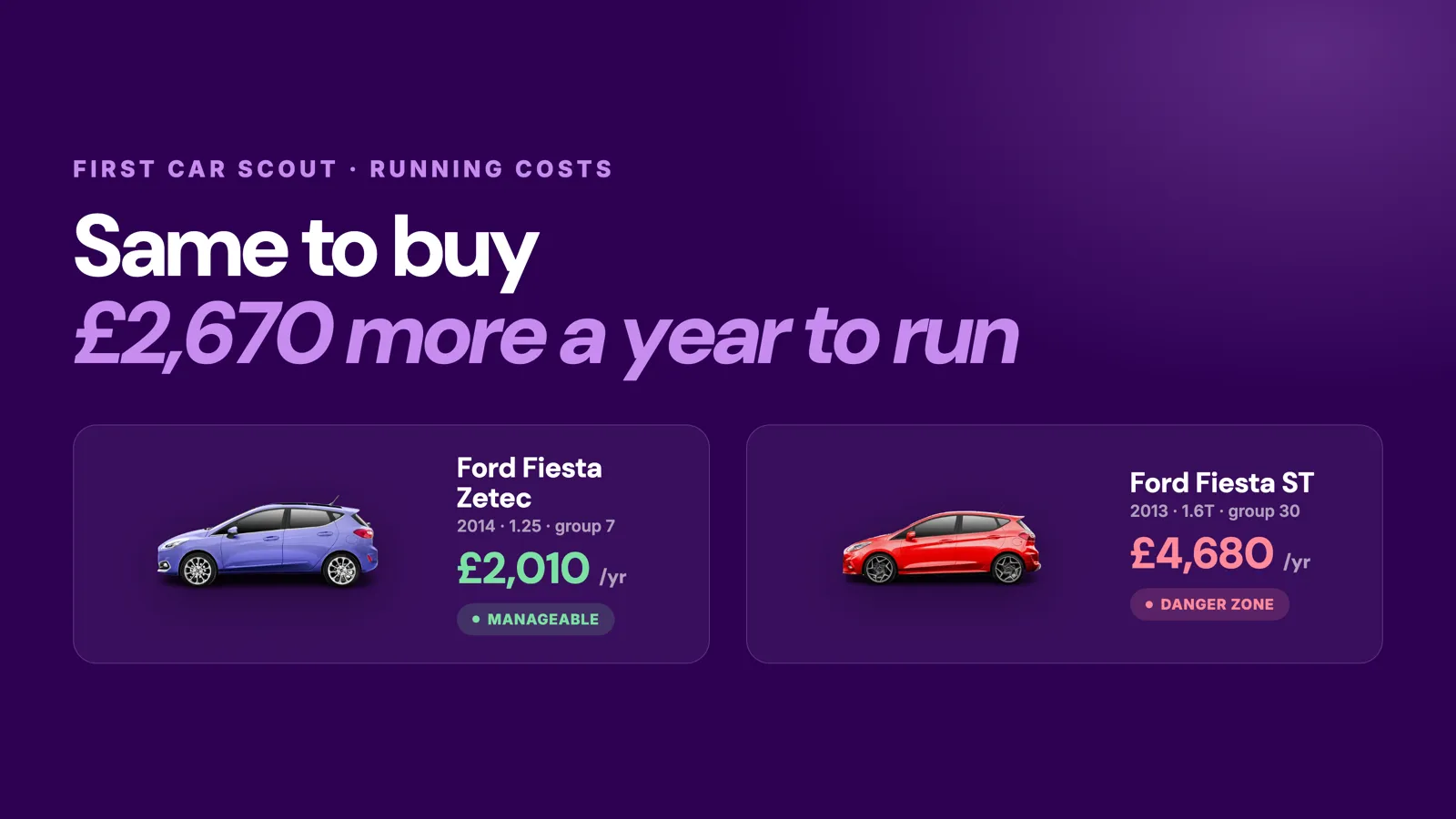
Imagine two Fiesta-sized cars with similar purchase prices.
One is the more powerful version, with higher running costs and a much bigger annual ownership bill. The other is the calmer, lower-cost choice that is easier to live with.
On paper they can look close. In reality, the difference can be thousands over a year.
Two similar purchase prices can lead to very different annual running costs.
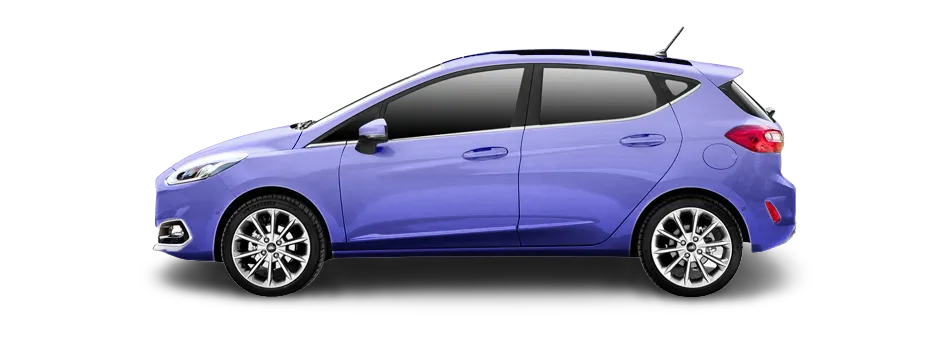
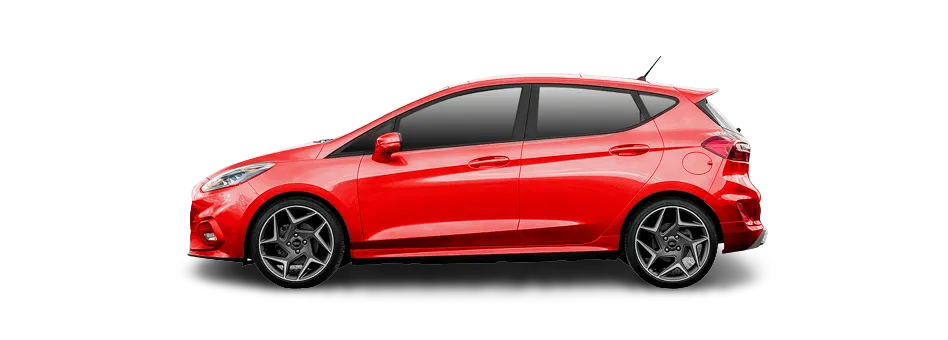
About £2,670 more a year to run, for a similar purchase price, driven mostly by the insurance group (30 versus 7).
How First Car Scout helps
First Car Scout helps families compare the full picture before they commit. Instead of starting with the lowest advert price, you can shortlist cars that make sense once the real costs are included.
That means fewer surprises, fewer bad compromises and a better first-car decision.