Black Box Insurance for Young Drivers: Is It Actually Worth It?
A telematics policy can reduce a new driver's premium significantly. But a black box is not a simple yes. Here is what it tracks, what it costs you, and who it suits.
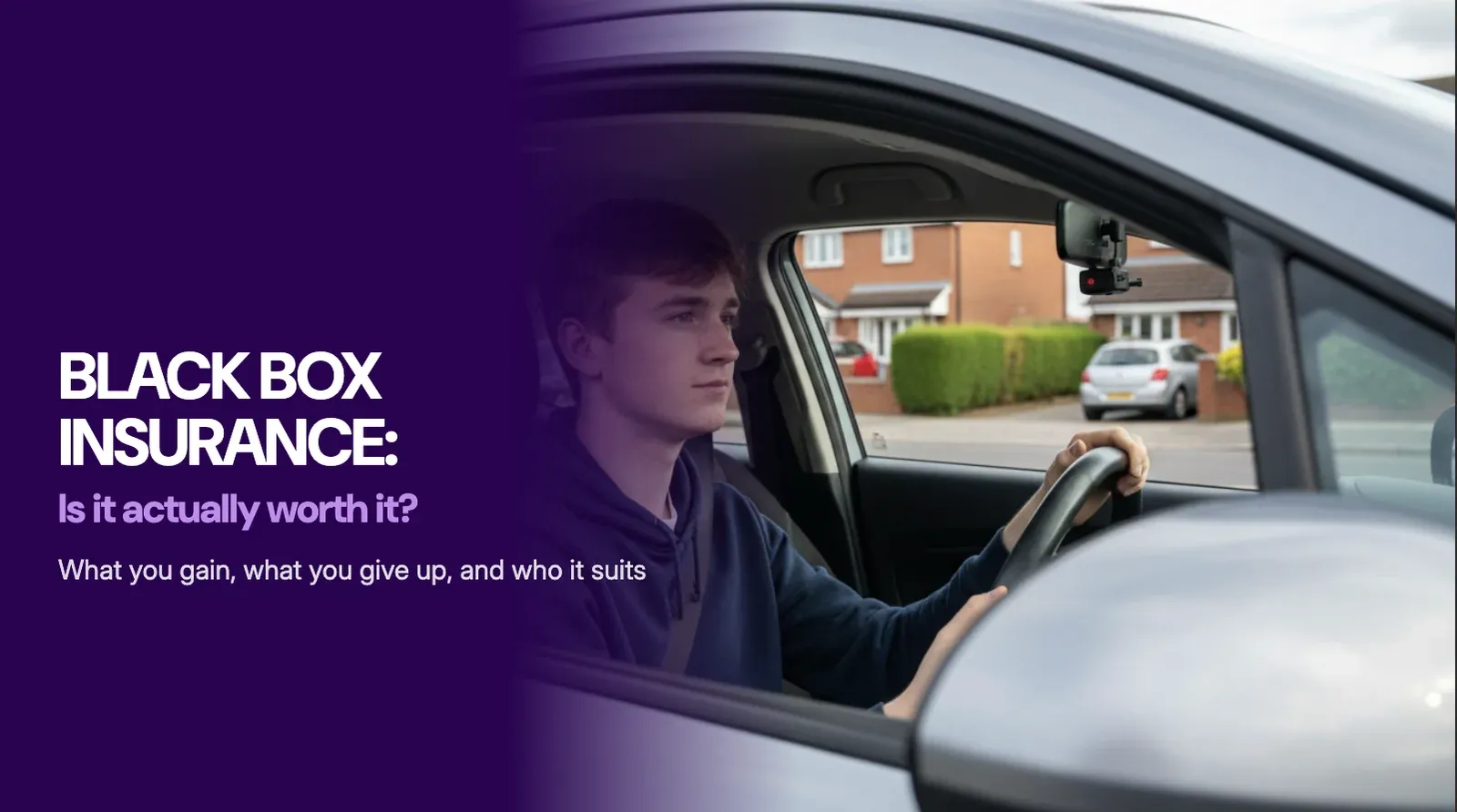
A black box policy can genuinely reduce the cost of insuring a first car. For many new drivers it is one of the most effective tools available. But it comes with trade-offs that comparison sites rarely explain clearly, and the saving is not guaranteed.
Here is what a black box actually does, what it monitors, who it suits, and the things worth reading before you sign.
What a black box is
A telematics device (almost always called a black box) is a small unit fitted to your car, usually behind the dashboard or to the windscreen. It connects to your insurer and records data about how you drive.
Some newer policies use a smartphone app instead of a physical device. The principle is the same: the insurer can see your driving habits and use that data when pricing your renewal, or when assessing a claim.
What it actually tracks
Speed
Whether you are travelling above the limit for the road you are on. GPS location data lets the device match your speed to the known limit at that point.
Acceleration and braking
Harsh acceleration and heavy braking are treated as risk indicators. Smooth, progressive inputs score better.
Cornering
Sharp cornering at speed is flagged. Steady cornering at appropriate speed is not.
Time of day
Many policies carry a curfew: driving between 11pm and 5am attracts a penalty on your score, a surcharge, or an outright restriction. Those hours carry a significantly higher claim rate across all ages, and insurers price them accordingly.
Miles driven
Your actual mileage is recorded. Some policies set a cap; exceeding it can trigger an additional charge or reduce your telematics discount at renewal.
Most insurers show you your driving score via an app or online portal, week by week. You can see which journeys affected the score and why.
The real saving
There is no single number that applies to every driver. The saving depends on the insurer, the car, and how you drive.
A telematics policy typically costs less than a standard policy for a new driver at the point of taking it out, because the insurer is trading a lower upfront price for the ability to monitor the risk directly. If your driving data is consistently good, the renewal is likely to be lower than a comparable standard policy. If the data shows a pattern of late-night driving, harsh braking or speeding, the saving at renewal shrinks or disappears.
The saving is applied to the base price for your car’s insurance group. A car in a low insurance group with a black box will generally cost less than a car in a high group with a black box. The group and the box work together: the group sets the floor, the box adjusts it.
The trade-offs worth knowing
Night curfews
Many policies restrict or penalise driving between 11pm and 5am. For most daily use this makes no practical difference. For shift workers, late social plans, or early-morning commutes, it is a real constraint. Check the exact hours before signing.
Score penalties for one-off events
A single emergency brake or one late-night drive can move your score. Some policies look at patterns across many journeys; others apply individual events mechanically. Read how the scoring works for the specific policy you are considering, not just the comparison-site summary.
Privacy
The insurer has a live record of where you go and when. Most standard policies do not. This is a reasonable trade-off for many drivers, but it is worth being clear-eyed that it is a trade-off.
Changing or selling the car
A physical black box is fitted to the car, not to you. If you sell or change the car before the policy ends, the device needs to be removed and reinstalled, usually at a cost. Check the policy terms for transfer fees before you commit.
App-only policies
Policies that run via a smartphone app require the app to be active and the phone in the car when driving. If you forget, the journey may record as unmonitored. Check how the insurer handles gaps in data before you rely on this type of policy.
Who a black box suits
A telematics policy tends to work well for drivers who:
- Do most of their driving in daylight and during standard hours
- Cover predictable, moderate mileage each year
- Drive smoothly and are comfortable adjusting to feedback
- Want to actively manage their renewal price based on data
It tends to suit less well for drivers who:
- Regularly drive late at night (shift work, hospitality, social hours past 11pm)
- Drive high annual mileage across varied hours and routes
- Find that monitoring creates anxiety that changes how they drive
Neither is right or wrong. The question is whether the trade-off makes financial sense for how you actually use a car.
Questions to ask before you sign
- What are the exact curfew hours, and what is the penalty for breaching them?
- How is the driving score calculated, and what happens if it drops below a threshold mid-policy?
- What does the policy cost if I exceed the mileage limit?
- Can the device be transferred if I change the car, and at what cost?
- What happens to my driving data when the policy ends?
Comparison sites will give you the headline price. The policy document gives you the actual terms. The two do not always tell the same story.
The car still matters
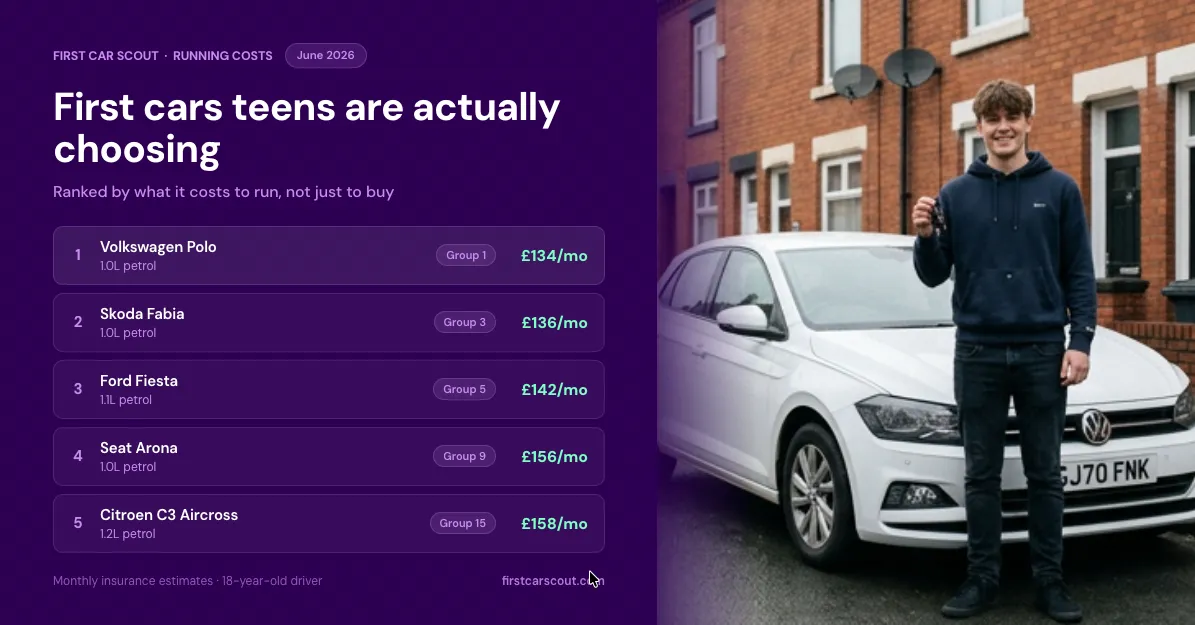
First Car Scout estimates the monthly running cost of each first car with a telematics figure alongside the standard estimate. The telematics figure shows you the realistic saving for that specific car, at its insurance group, for a new driver profile.
A car in a low insurance group with a telematics policy is usually the most cost-effective combination for a new driver. A car in a high group with a black box is still more expensive than a low-group car without one.
Our guide on what actually drives your premium explains the five main pricing factors and why the car’s group is the one lever you can set before you spend any money.
Frequently asked questions
Is a black box compulsory for young drivers?
No. It is one option. Some insurers offer only telematics policies to under-25s; others offer both. You are not required to have one, but for many new drivers it is the most cost-effective policy type in the first year or two.
Can a black box be used against me if I have an accident?
The data will be used when you make a claim. The insurer can see your speed, location and braking behaviour at the time of the incident. If your driving is inconsistent with your declarations, that may affect the outcome of the claim. Honest declarations matter regardless of whether a box is fitted or not.
Will my score drop if I brake hard in an emergency?
It depends on the insurer. Some look at patterns across many journeys rather than individual events. One hard brake after weeks of smooth driving is usually treated differently from a consistent pattern of harsh braking. Check the terms for the specific policy, not a general description of how telematics works.
What happens to the black box if I sell the car?
The device is removed by a specialist fitter, usually at a cost quoted in the policy (often £50 to £150). Some insurers will transfer it to a replacement vehicle; others require a new installation. Check the terms before selling. Leaving the device in the car without telling the insurer is not an acceptable approach.
Does a black box policy count towards a no-claims bonus?
Yes. A claim-free year on a telematics policy builds the same no-claims record as a year on a standard policy. The no-claims bonus is yours at renewal, regardless of policy type.
How long will I need a black box?
Most new drivers stay on a telematics policy for one to three years, then switch to a standard policy once they have built a no-claims record and their age band has moved. The transition is straightforward: the device is removed at the end of the policy period.