What Nobody Tells You About Buying a First Car in 2026
The sticker price is no longer the main trap. In 2026, it's the total cost stack that catches families out. Here's what to check before you fall in love with a car.
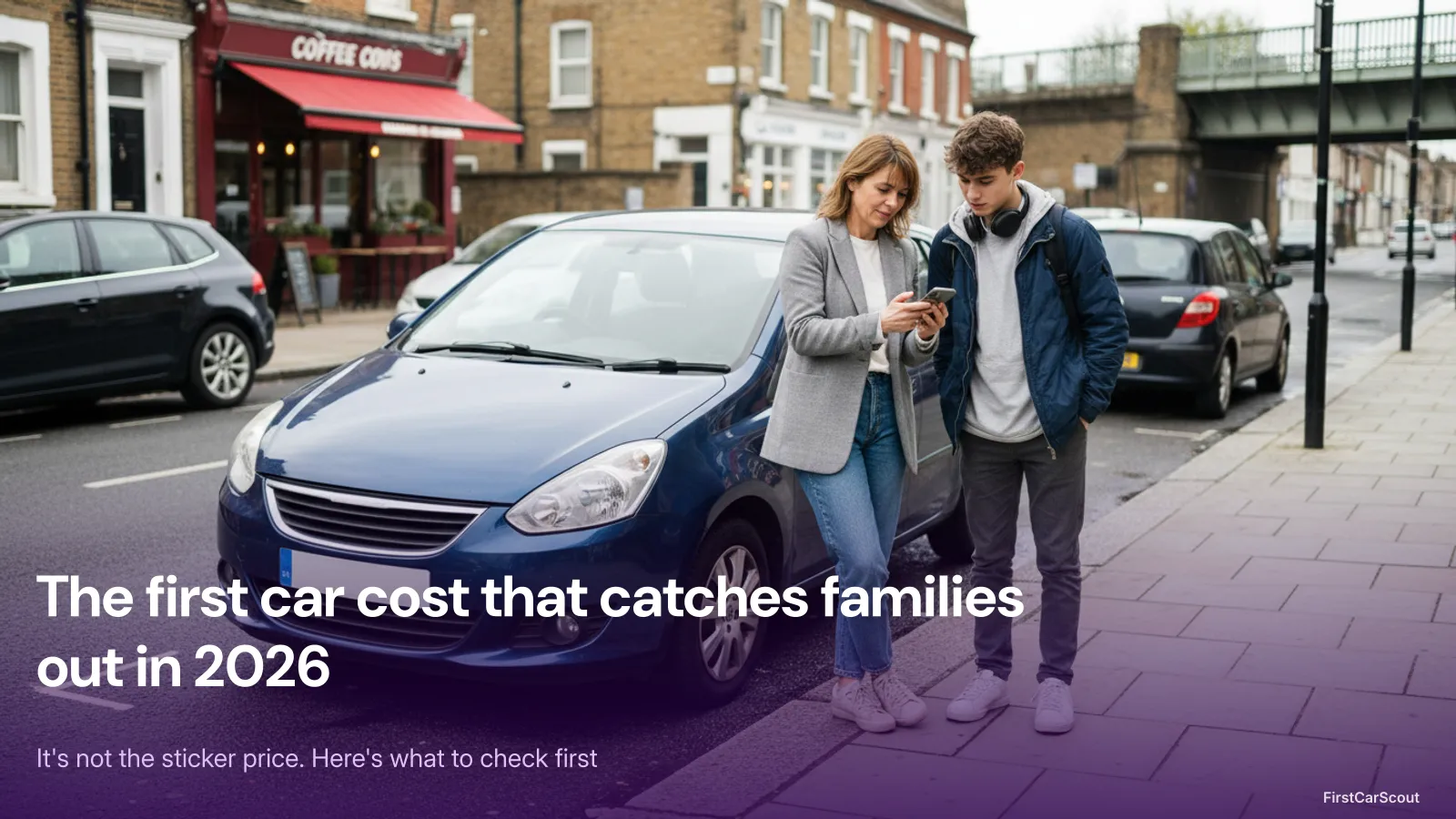
The sticker price used to be the problem. It isn’t anymore.
A few years ago, the conversation about first cars was mostly about what you could afford to buy. In 2026, that’s changed. The car that looks right on AutoTrader, the one that fits the budget, the one someone’s already emotionally attached to, can still be the wrong decision once you add up what it actually costs to own.
This is the thing families keep telling us they wish they’d known sooner. Not that cars are expensive. That the costs arrive in an order that catches you off guard.
The total cost stack: what it actually looks like
The purchase price is just the entry point. What you’re really signing up for is a stack of ongoing costs that run in parallel, and the gap between a sensible choice and a painful one often comes down to how those costs interact.
Here’s the stack, in roughly the order it hits you:
Purchase price: The number everyone focuses on. It matters, but it’s the one cost that stops after day one.
Premiums: For a new driver under 25, this is frequently the biggest annual spend, sometimes exceeding the value of the car itself. Drivers with a conviction or points history can find mainstream comparison sites return no usable estimate at all, regardless of the car. Another driver saw premiums jump 500% at renewal after a single incident. The car choice drives this number significantly: the same driver in a group 3 car versus a group 15 car can face a difference of hundreds of pounds a month.
Fuel: A 1.0-litre petrol supermini and a 2.0-litre import are not the same fuel bill. Neither is a hybrid and a straight petrol on a commute full of stop-start traffic.
Road tax (VED): Low-emission petrol cars under a certain CO2 threshold cost significantly less to tax. Worth checking before you buy, not after.
Servicing and tyres: Older cars and less common models can mean harder-to-source parts and higher labour costs. A car with MOT advisories that look minor can hide cumulative costs that turn a £1,500 purchase into a money pit.
The timing problem
What makes this genuinely difficult is that most families discover the real cost stack in the wrong order. The emotional attachment to a specific car happens first. The running-cost reality lands second, often after the purchase.
We hear this pattern constantly. A parent told us their cheapest estimates were coming back at £3,000, up from £600 the previous year. A teenager described discovering their premium costs twice what they paid for the car. Another found out their policy had been cancelled without notification, only when police were involved.
None of these are fringe situations. They’re the normal experience of first-car buying in 2026, precisely because the tools most people use (car marketplaces, comparison sites) aren’t designed to show you the combined picture at the moment you need it.
The affordable end of the market is tighter than it looks
There’s a second issue that doesn’t get talked about enough: supply. The cars that are genuinely sensible for a new driver, low insurance group, reliable, modest engine, clean history, are a smaller pool than they appear. Prices for well-maintained group 1 to 5 cars have moved up. The £5,000 first car that was easy to find in 2022 is now harder to locate in good condition, and the ones that are there move quickly.
This creates pressure to compromise. And compromise, in this context, often means buying a car that looks fine on paper but costs more to run than the family budgeted for.
What to do instead
The buyers who avoid the trap tend to do one thing differently: they treat the purchase price and the first year of running costs as a single combined budget, and they check the running costs before they fall in love with the car.
In practice, that means:
- Getting a premium estimate on a specific reg before you visit the car, not after
- Checking the insurance group alongside the sticker price, every time
- Running the MOT history (free on the DVLA website) before you travel to view anything
- Factoring fuel type, engine size, and tax band into the monthly cost calculation
- Leaving room in the budget for the first service and any advisories the MOT flagged
A car in insurance group 3 with a clean MOT history and a 1.0-litre petrol engine might not be the one that generates excitement on a marketplace listing. But it’s often the one that’s still affordable six months after purchase, which is the part that actually matters.
The shortlist is the hard part
Knowing what to look for is one thing. Finding specific cars that actually meet all the criteria at once, right price, right group, right history, available now, is where most buyers get stuck. That’s what FirstCarScout is built to help with. Try the free shortlist tool and see what comes back for your budget and situation.