How to Get Car Insurance Under £125 a Month as a New Driver: What Actually Moves the Number
Sub-£125 a month is achievable for new drivers, but only if the car choice comes first. Here is which levers actually close the gap, in the order that matters.
Why £125 a month is hard but not impossible, and what is actually setting your starting price
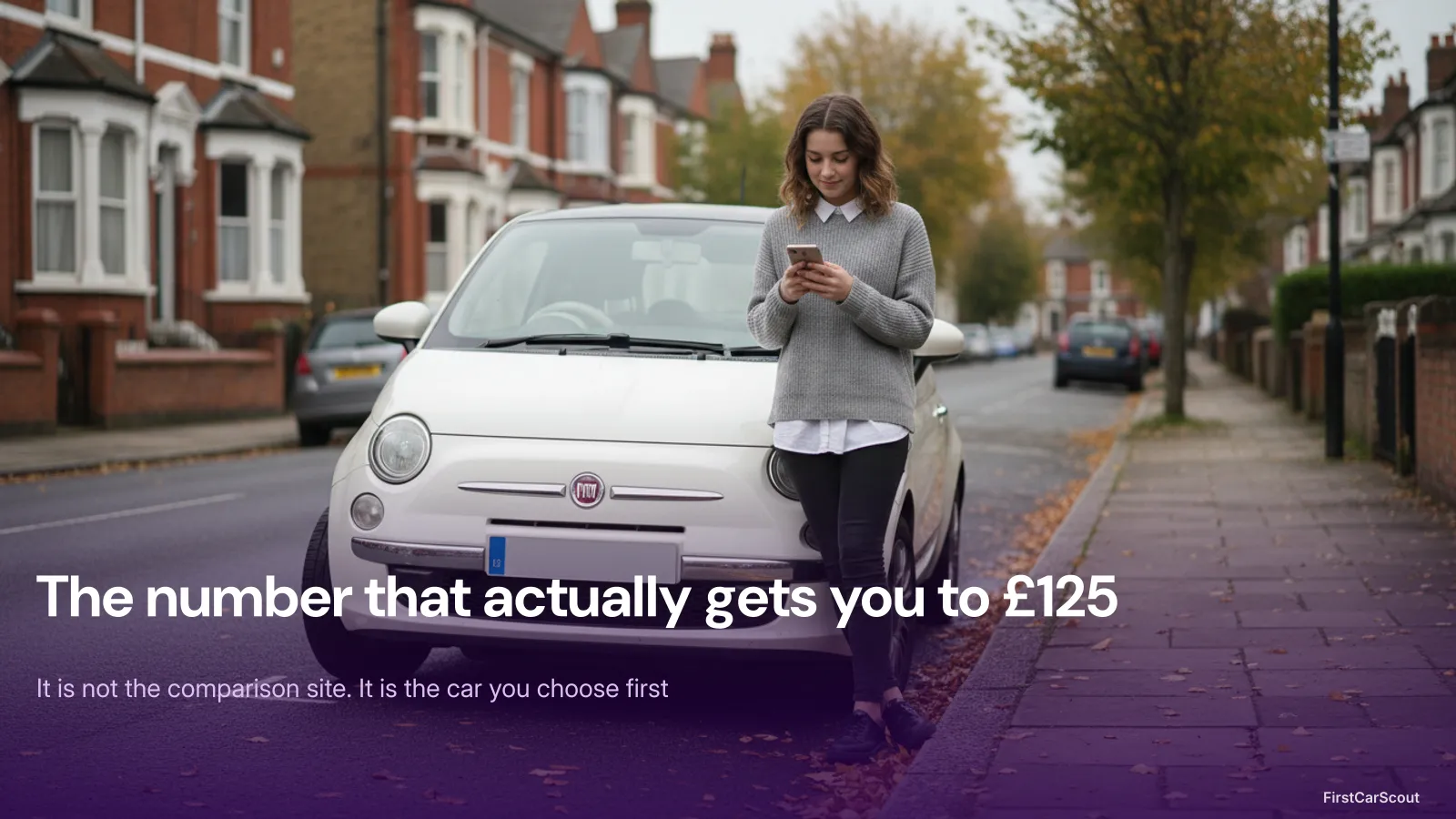
At 17 or 18, a standard policy on the wrong car will not get close to £125 a month regardless of what else you do. We hear from new drivers getting estimates above £600 a month, and from parents watching renewal costs jump from £600 a year to £3,000 with no change in driving record. Those numbers are real, but they are not universal. The difference between a £600-a-month estimate and a £90-a-month estimate is almost never the comparison site used or the payment method chosen. It is the car.
Insurers price the vehicle before they price almost anything else. That is the mental model reset this article is built on. Shopping tricks come later. Car selection comes first.
The car you choose sets the ceiling, and most first cars are chosen before the insurance is checked
The UK moved to a 1 to 99 Vehicle Risk Rating system in August 2024, replacing the older 1 to 50 group scale, though many sources still reference the older groups. Either way, the principle is identical: vehicles rated at the lower end cost dramatically less to insure than those rated higher, and the difference for a new driver can be thousands of pounds a year.
The most common and costly mistake in first-car buying is sequencing this backwards. One pattern we see repeatedly: a teenager finds a car they love, commits emotionally, then discovers the insurance estimate is twice the car’s purchase price. Another common version: a new driver with a conviction or points history gets no usable estimate at all, or one wildly disconnected from the car’s actual value, because mainstream comparison sites cannot price that risk properly.
As one new driver put it: “The car I’d wanted since I started learning, no way I was leaving it.” That attachment is understandable. It is also expensive. The fix is simple in principle: check the insurance cost before viewing the car, not after falling in love with it.
The two levers that actually close the gap to £125, and the ones that barely move it
Two changes independently make the largest numerical difference for new drivers.
Vehicle rating: Cars in the lowest rating bands (broadly equivalent to old groups 1 to 5) can cost half as much to insure as cars in mid-range bands. A Volkswagen Up, Hyundai i10, Kia Picanto, or Toyota Aygo in a basic trim sits at the low end. A Vauxhall Corsa in a sportier trim, or an Audi A3, can sit many bands higher despite looking like a reasonable choice.
Telematics (black box) policy: For a new driver with no claims history, switching to a telematics policy is the single biggest lever available after vehicle choice. Providers price around actual driving behaviour rather than statistical age risk. One driver we spoke to paid £2,500 in year one on a black box and saw the renewal drop to £700 with a consistently high driving score. That trajectory is not guaranteed, but it reflects how the system is designed to work.
Stacking these two changes together is what makes sub-£125 realistic. Everything else, paying annually instead of monthly, adding an experienced named driver who genuinely uses the car, accurately stating a lower mileage, noting off-street parking, contributes real savings but in smaller increments. They are supporting levers, not primary ones. Understanding that hierarchy stops people spending time on minor adjustments while ignoring the variables that move the number by hundreds.
A realistic worked example: what a sub-£125 month actually looks like
Here is a specific illustrative combination. An 18-year-old on a low-rated city car (old-scale group 1 to 3), on a telematics policy, paying annually, with a parent added as a named driver who occasionally uses the car.
For that combination, annual premium estimates in 2024 to 2025 have come in between £900 and £1,400 depending on postcode and the exact vehicle. At £1,200 annually, that is £100 a month. At £1,400, it is just under £117. Sub-£125 is within reach, but every element in the combination has to be right. Remove the telematics policy and the annual figure can rise by £600 or more. Choose a car in a mid-range band instead of the lowest and the same thing happens.
This is the gap that most advice leaves: abstract tactics without a grounded example showing what actually has to be true for the target to work.
What can still wreck the number even on the right car
Four things can make even a sensible car-and-policy combination unaffordable.
Postcode: A driver in a high-theft or high-claim postcode can pay significantly more than the same driver and car in a rural area. This is not adjustable, but it is worth knowing that some insurers weight it more heavily than others.
Conviction history: Mainstream comparison sites either return no results or return estimates that bear no relation to the car’s actual value once a conviction or points history is in the mix. This is a structurally different problem that requires a specialist convictions broker, not a different comparison site.
Hidden policy conditions: New drivers have discovered their cover was cancelled without notification, only finding out after a police stop. Occupation, licence type, and incident history are all material facts that can trigger cancellation silently. Read the policy conditions before purchasing, not after.
Modifications: Even minor changes to a standard car can void cover or spike the premium. Keep the car standard.
How FirstCarScout can help you check the insurance cost before you fall in love with the car
FirstCarScout surfaces vehicle rating data and running cost information at the point of car discovery, so the sequencing problem, choosing a car before checking its insurance cost, does not happen.
What the tool does: it brings insurance group, MOT history, and reliability signals together in one place, so you can filter by what the car actually costs to run, not just what it costs to buy. The parent who told us they wanted to “find it all in one place” is exactly who it is built for.
What it does not solve: if you have conviction history, a structurally different problem exists that no car-search tool can fix. FirstCarScout can signpost specialist broker routes for that situation, but the solution lies with brokers who understand non-standard risk, not with a comparison site.
The most expensive mistake in first-car buying is choosing the car before checking what it costs to insure. The tool exists to make that mistake harder to make.
FAQ
Can an 18-year-old actually get car insurance under £125 a month? Yes, but only with the right combination: a low-rated vehicle, a telematics policy, annual payment, and ideally a named experienced driver. All four need to be in place. Miss one and the estimate typically rises above the target.
Which cars in 2024 to 2025 sit in the lowest insurance groups for new drivers? Consistently low-rated options include the Volkswagen Up, Hyundai i10, Kia Picanto, Toyota Aygo, Skoda Citigo, SEAT Mii, and Fiat Panda in basic trim. Engine size and trim matter as much as the badge: a sporty trim of any of these can push the rating significantly higher.
Does a black box policy really make enough difference, and what are the catches? For most new drivers it is the single biggest saving available after vehicle choice. Catches include curfew restrictions on some policies, the fact that harsh braking or late-night driving can increase rather than reduce the renewal estimate, and that some providers do not cover older or uncommon vehicles.
Why am I getting no results, or estimates over £10,000, on comparison sites? Conviction history, unusual vehicles, or import status can cause comparison sites to return nothing or return figures disconnected from reality. This is not a data-entry error. It is a panel-coverage problem. Specialist brokers are the correct route, not a different comparison site.