The Parent-Teen Shortlist: First Cars You Can Both Agree On
A dual-track guide that walks parents and teens through two filters, running costs first, safety floor second, so the argument gets settled by evidence, not emotion.
Why this argument is harder than it looks, and why both sides have a point
The teen isn’t being vain. The parent isn’t being paranoid. Both are reacting to something real.
A 17-year-old who’s been told to get a beige city car as their first set of wheels isn’t being ungrateful, they’re responding to the genuine social weight a car carries at that age. One user put it plainly in our research: “I’d prefer a bigger car than the recommended ‘first bangers’.” That instinct deserves acknowledgement, not dismissal.
The parent’s counter-instinct is equally legitimate. A new driver on a dual carriageway needs a car with enough structural integrity and safety technology to matter in a real collision. That’s not anxiety. That’s a reasonable minimum.
The problem is that neither side has a framework for resolving the tension before one of them falls in love with a specific car. This guide gives you that framework, two filters, applied in sequence, before anyone books a test drive.
The running-cost reality check: run this before you name a single model
The single most common failure mode in our research is this: a family finds a car, emotionally commits to it, buys it, and then discovers the annual premium is nearly as large as the purchase price. The fix then becomes damage control, a black box fitted reactively rather than chosen deliberately, rather than a better decision made earlier.
Before either side gets attached to anything, check two numbers on the exact registration: the insurance group, and a real premium estimate from a comparison site using that specific plate. The insurance group is set by Thatcham Research on behalf of the ABI Group Rating Panel, and comparison sites will show you real figures for a named driver profile. Do not use askMID for this. askMID (the Motor Insurers’ Bureau’s public tool) tells you whether a vehicle is currently insured on the Motor Insurance Database, it is a compliance check, not an insurance group lookup.
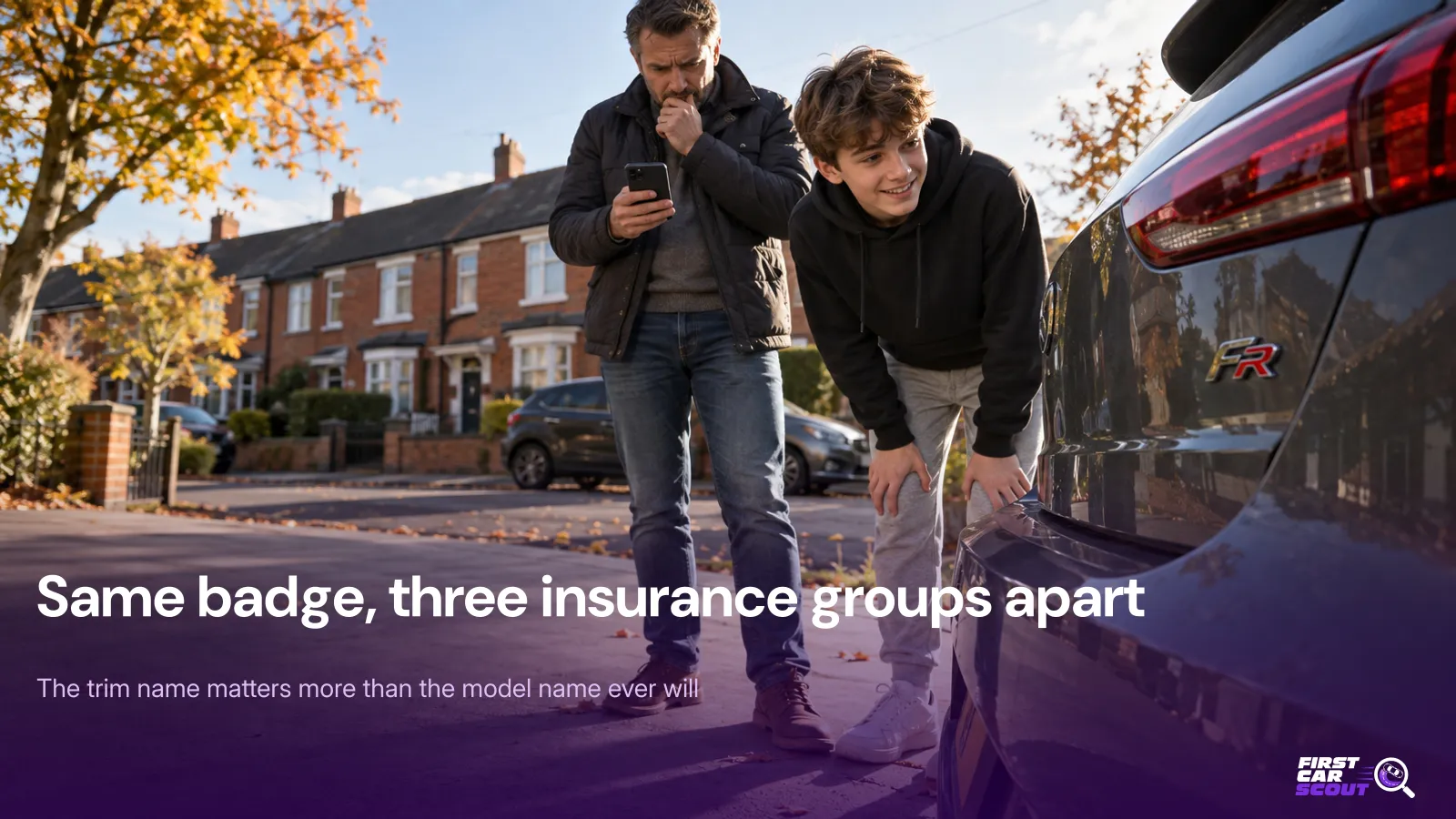
The reason you need the registration, not just the model name, matters more than most guides acknowledge. The same badge can cover wildly different risks. A Ford Fiesta 1.0 in a base trim and a Ford Fiesta 1.0 ST-Line are not the same insurance decision. Engine, trim, power output, and year all affect the group. One user in our research described finding a £4,000 car with a premium that nearly matched it, and that discovery came after purchase, not before.
If the numbers work, proceed. If they don’t, move on before the emotional attachment sets in.
The safety floor: what actually protects a new driver
The parent’s safety concern is legitimate, but it’s often aimed at the wrong target. Newness and brand reputation are not reliable proxies for genuine protection. Some cars that parents consider sensible are old enough to predate autonomous emergency braking (AEB) entirely. Some cars teens dismiss as too boring are mid-cycle refreshes with five-star Euro NCAP adult occupant ratings and AEB fitted as standard.
The safety floor worth caring about is this: Euro NCAP adult occupant score of four stars or better, AEB available on the specific trim being considered, and enough structural integrity to matter at motorway speeds. Check the exact model generation and the exact trim, not just the brand or the model name.
A car that clears this bar and also clears the running-cost filter is the overlap you’re looking for. It exists. You have to look for it deliberately.
The overlap: cars that clear both filters simultaneously
Applying both filters, insurable without crisis, and meeting a genuine safety floor, produces a shorter list than either side started with. Some specific model generations worth checking:
- Volkswagen Polo (2017 onwards, 1.0 MPI base trim): low groups on the smaller engine, and post-2017 Polos carry a five-star Euro NCAP rating with AEB available. The sportier trims jump groups noticeably, so specify the version.
- Hyundai i20 (2020 onwards): five-star Euro NCAP, AEB standard across the range, and the 1.0 T-GDi in lower trims sits in accessible groups. More interior space than the i10, which helps with the ‘banger’ perception.
- Toyota Yaris (2020 onwards): five-star Euro NCAP, standard AEB, and the hybrid drivetrain puts it in a lower insurance group than many petrol equivalents of the same size. The newer generation is a meaningful step up aesthetically from earlier versions.
- Honda Jazz (2020 onwards): four-star Euro NCAP (a genuine result, not a floor failure), standard AEB, and the hybrid’s running costs are strong. Rear space is genuinely impressive for the footprint, a point that lands well with teens who want room for friends.
Some of these will feel underwhelming on first impression. The Yaris hybrid and the i20 are available in sharper colours and higher trims that reduce the ‘first banger’ feel without changing the insurance group dramatically, worth checking the specific trim before dismissing the model.
The negotiation: how to have the conversation without a standoff
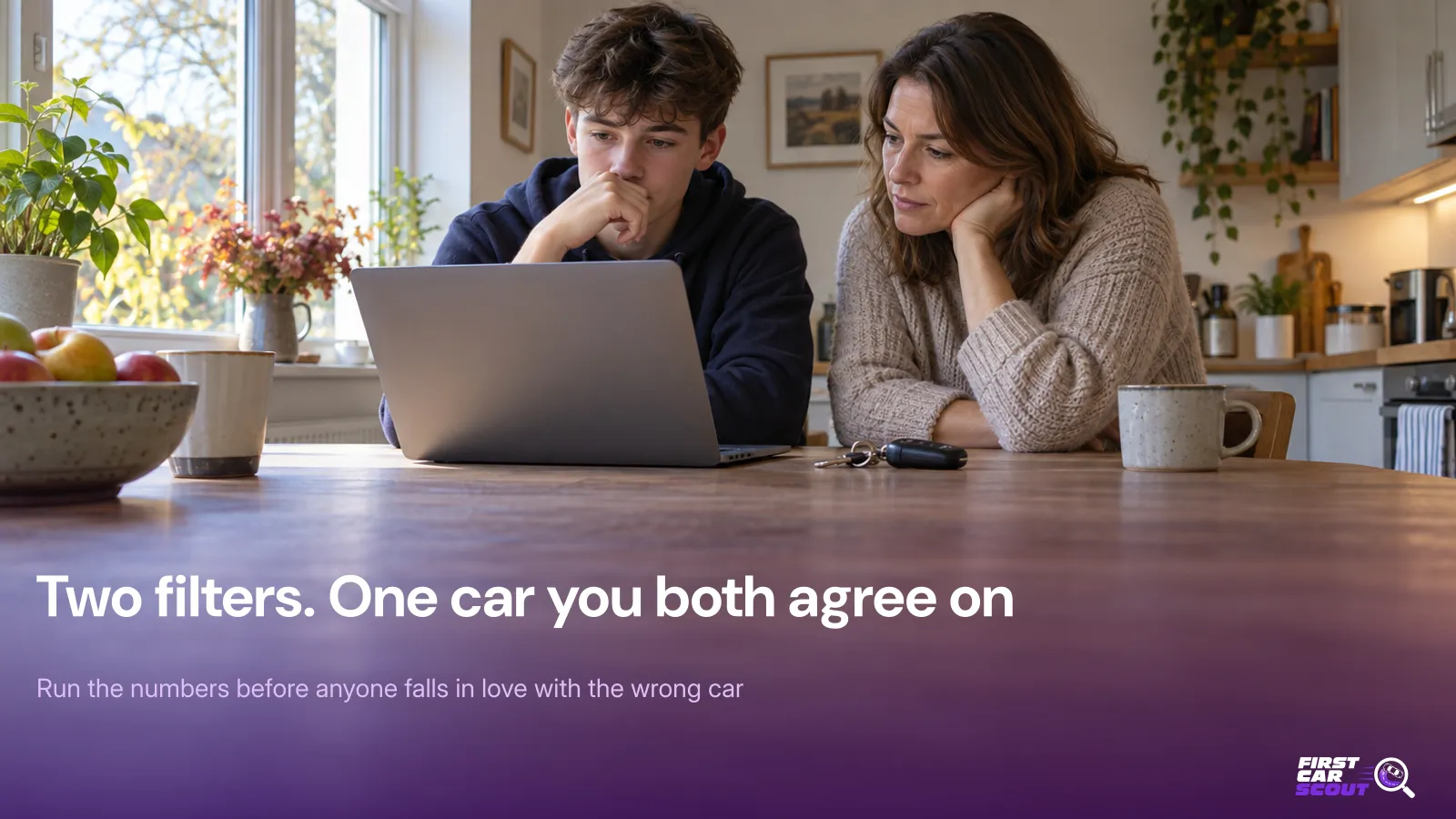
The most practical tool for the discussion is a shared first-year budget that includes purchase price and the first year’s premiums as a single number, not two separate conversations. Our research shows repeatedly that insurance discovery arrives after emotional commitment to a car, not before it. The fix is structural: agree the combined budget first, run estimates together on three or four candidates from the list above, and let the numbers do the arguing.
If the teen has already fallen for a specific car before the cost check happens, that’s the most common failure point. The solution is not to override their preference, it’s to run the cost check on their preferred car alongside two or three alternatives, side by side. Seeing a £700 annual difference between two cars of similar size and spec lands differently than being told ‘that car’s too expensive.‘
A few questions worth settling before you buy
Does a higher insurance group always mean a less safe car? No. Group and safety rating are set independently. A car can be in a high group because of repair costs, theft appeal, or power output, not because it’s structurally weak. Run both checks separately.
My teen likes a specific era’s aesthetic. Can they have that without an insurance disaster? Sometimes. The key is to look for newer cars that share design language with older ones, the 2020 Yaris is a genuine leap from the previous generation visually, rather than buying the older car for the look. Classic cars can also sit in surprisingly low groups, but the safety floor check becomes harder for pre-AEB vehicles.
Does trim level actually change the insurance group? Yes, it can. Trim affects standard equipment, power output, and repair cost. An ST-Line Fiesta and a standard Fiesta with the same engine are not always the same group. Check the specific trim, not just the engine.
When does adding a parent as a named driver actually help? It helps when the parent genuinely also drives the car and has a clean licence and driving history. It helps less when the parent is added purely to move the number, and it becomes fronting, which voids the policy, when the parent is listed as the main driver but the teen is the primary user. Be accurate.