Cool Cars That Won't Bankrupt You on Running Costs
You've already fallen for a JDM classic or an Audi A3. Here's how to find a first car that actually feels like a choice, not a punishment, without the annual-premium horror story.
The car you want versus the car you can afford
Almost every first-car search starts the same way. You find something you genuinely love, a JDM import, an Audi A3, a Mini Cooper S, maybe a classic you spotted on a forum. You look up the price and it fits your budget. Then you check the running costs and the whole thing collapses.
This is not a coincidence. Insurers, fuel costs, and parts prices all react to the same signals: engine size, badge prestige, vehicle age, and how many young drivers have claimed on that model before. The cars teenagers fall for hardest are often the ones that price worst for a new driver. That gap between aspiration and affordability is real, but it is not absolute. There are cars that thread the needle.
Why the aspiration cars cost what they cost
When someone in our community looked at a 1995 2-litre Japanese import as a first car, every quote came back unaffordable. Not because the car was expensive to buy, but because the combination of new licence, no no-claims discount, older import, and a 2-litre engine is one of the worst possible stacks for a first-year premium. Each factor pushes the price up on its own. All four together is brutal.
The same logic applies to an 18-year-old looking at an Audi A3. One person in our community was quoted roughly £15,000 per year on a £4,000 car. The car was not the problem. The badge, the engine, and the age of the driver combined into a number that no longer made sense.
The insight buried in those examples: the car you buy and the annual running cost are one combined budget decision, not two separate ones. If you price them separately, you will get caught out.
Cars that feel like a real choice
The good news is that low running costs and something approaching personality are not mutually exclusive. Here is where the evidence actually points.
Audi A1 (1.0 TFSI, lower trim): This is the clearest answer for anyone who wants the premium feel without the A3 penalty. The interior quality is genuinely good. The badge is the same. The 1.0 TFSI in a base or Sport trim sits in a much friendlier group than the A3, and the running costs reflect that. Avoid S line trims and anything above 1.4, both jump the group noticeably.
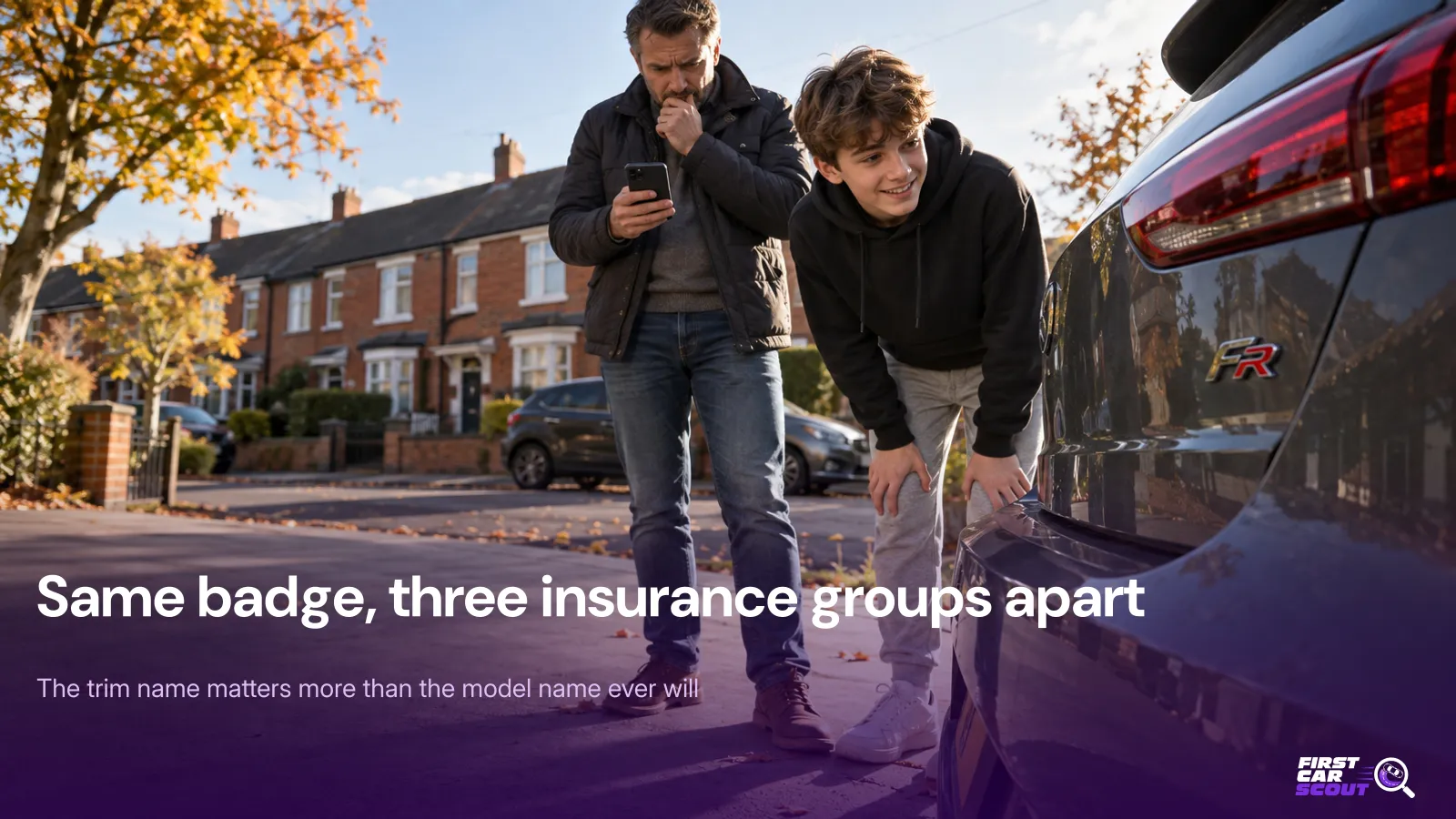
SEAT Ibiza FR trim: The Ibiza FR looks sharper than a standard supermini and feels it too. Underneath it shares its platform with the Polo and Fabia, which means parts are cheap and mechanics know it well. The FR trim gives you the visual without the penalty of an actual performance engine.
Mini One or Cooper (not the S): The Cooper S is the car that generates £2,400 premiums for experienced drivers and eye-watering numbers for new ones. The One and standard Cooper use the same body and the same cabin. The interior quality is the same. The running costs are a completely different conversation.
Mazda 2 (2015 onwards): Consistently underrated. The interior quality punches above its class, the reliability record is strong, and because it is not fashionable enough to attract young drivers in numbers, the insurance group is kinder than the car’s quality suggests it should be.
Ford Fiesta ST-Line (not the ST): The ST-Line gives you the bodykit, the lowered suspension, and the interior trim of the ST performance model. The engine under the bonnet is the standard 1.0 EcoBoost. That distinction is the whole point. Visually you have the sporty car. On paper, the insurer sees the sensible one.
The things that move the number more than the car does
The car choice matters, but two levers move the annual premium more than most people realise.
A telematics (black box) policy is usually the single biggest saving available to a new driver. One person in our community went from £2,500 in year one to £700 in year two, a 72% reduction, partly because a consistent 95 to 100 black box score over 12 months gave the insurer real data to work with instead of assumptions. The box is not permanent. It is a way of proving you are not the average new driver.
Adding an experienced named driver, typically a parent who genuinely does use the car sometimes, also brings premiums down meaningfully. The key word is genuinely. If a parent is listed as the main driver when the car is really the teenager’s, that is fronting, it is fraud, and it voids the policy if a claim is made.
Check the combined number before you commit
The practical rule: before you fall for a specific car, run the registration on a comparison site and get a rough annual figure. Do it on the actual car, not the model in general, because two identical cars with different trim levels or engine sizes can sit in different insurance groups and produce very different numbers.
The cars that feel like a choice at 17 or 18 are not all the boring ones. Some of them just require knowing which version of the car to look for.
Use the FirstCarScout shortlist tool to filter by running costs alongside purchase price, so you see both numbers together from the start.