Which UK Theory Test App Should You Actually Use
A grounded look at the UK driving theory test apps worth paying for, why the official DVSA kit is the safest bet, and where the popular alternatives fit in.
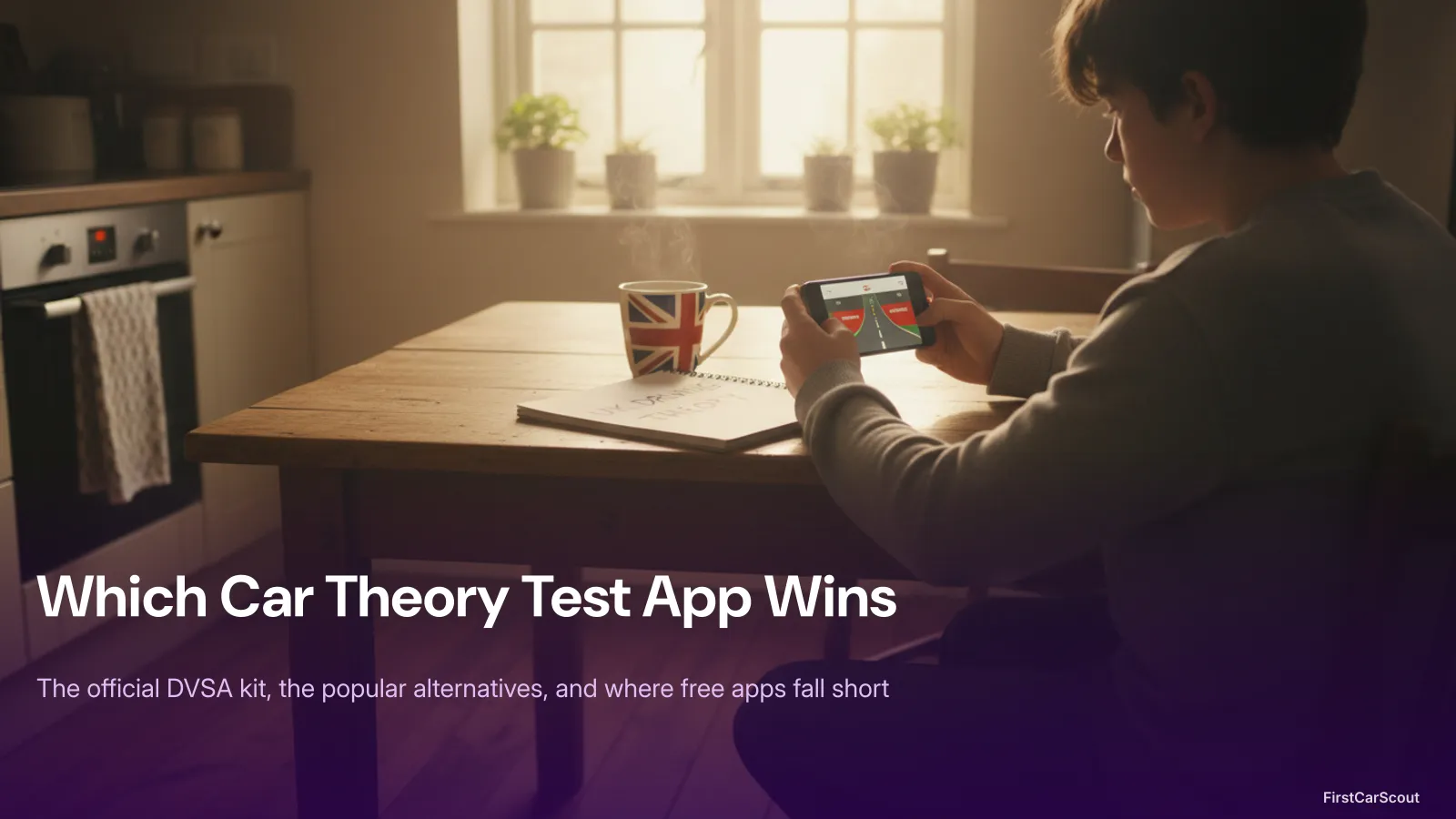
Passing the theory test is the first proper hurdle on the way to a first car, and the app you revise with genuinely matters. The test has two parts: 50 multiple-choice questions (you need 43 to pass) and the hazard perception clips (you need 44 out of 75). Both are set by the Driver and Vehicle Standards Agency (DVSA), so the sensible starting point is the app closest to that source.
This guide is about picking a revision app, not a car, but the two are connected. The sooner you pass theory, the sooner you can book a practical, and the sooner your name goes on a licence that insurers can actually price. So it is worth doing this bit efficiently rather than dragging it out.
The safest choice: the official DVSA app
The Official DVSA Theory Test Kit is the only app written by the people who set the test. Its question bank and hazard perception clips come from the same source the real test draws on, which means fewer surprises on the day. It covers all 14 topics, gives you practice questions per topic, and lets you sit mock tests in the real format.
The honest downside is that it is a paid app rather than free. For most learners that is money well spent, because you are revising against the actual material rather than someone’s approximation of it. If you only buy one thing, buy this.
One word of caution: search the app store carefully. There are lookalike and re-uploaded versions floating around under similar names. Go through the official DVSA listing (linked from the gov.uk and Safe Driving for Life sites) so you know you have got the genuine one.
The popular alternative: My Theory Test by James May
My Theory Test, fronted by James May, is the best-known paid alternative and it is genuinely well made. The learning material is presented clearly, the interface is friendly, and a lot of people find the tone easier to sit with than a plainer official app. It uses the official question bank too, so the content you are tested on lines up with the real thing.
If the official kit feels dry and you know that will stop you opening it, this is a reasonable pick. The material is what matters, and an app you actually use beats a better app you avoid.
The free options, and their catch
There are free apps and websites (Driving Theory 4 All and various ad-supported apps among them). They can be useful for casual top-up practice, and there is no harm in using one alongside a paid app.
The catch is twofold. Free apps often carry ads that break your concentration, and some pull in older or slightly reworded questions rather than the current official set. For the multiple-choice section that is a minor risk. For hazard perception it is a bigger one, because the clips and the scoring window are specific and hard to replicate well for free. If you rely only on free clips you can walk in with the wrong instincts about when to click.
How to actually use whichever app you pick
Buying the app is the easy part. A few habits make the difference:
- Do topic practice first, mocks second. Work through the 14 topics until each one feels solid, then start sitting full mock tests to build stamina and timing.
- Treat hazard perception as a separate skill. It is not knowledge, it is reaction and timing. Practise the clips specifically, and learn to click once as the hazard develops rather than hammering the button (which the system flags and scores as zero).
- Read the questions properly. A lot of failed marks come from skim-reading, not from not knowing the answer.
- Keep going right up to the test. A short daily session beats one long cram.
The bottom line
If you want the single safest answer: buy the Official DVSA Theory Test Kit, because the content comes straight from the people who set the test. If you find it too dry to stick with, My Theory Test by James May is a solid paid alternative on the same official material. Free apps are fine as extra practice, but be wary of relying on them for hazard perception.
Whichever you choose, book the test once your mock scores are consistently comfortable rather than scraping the pass mark. Pass it cleanly, get the practical booked, and then the real fun (and the real budgeting) begins: finding a sensible first car that will not cost a fortune to run once you are on the road.