How Do You Apply for a First Provisional Driving Licence in the UK?
How do you apply for a first provisional driving licence in the UK? Apply on GOV.UK for £34, or by post for £43. Eligibility, ID, delays and FAQs.
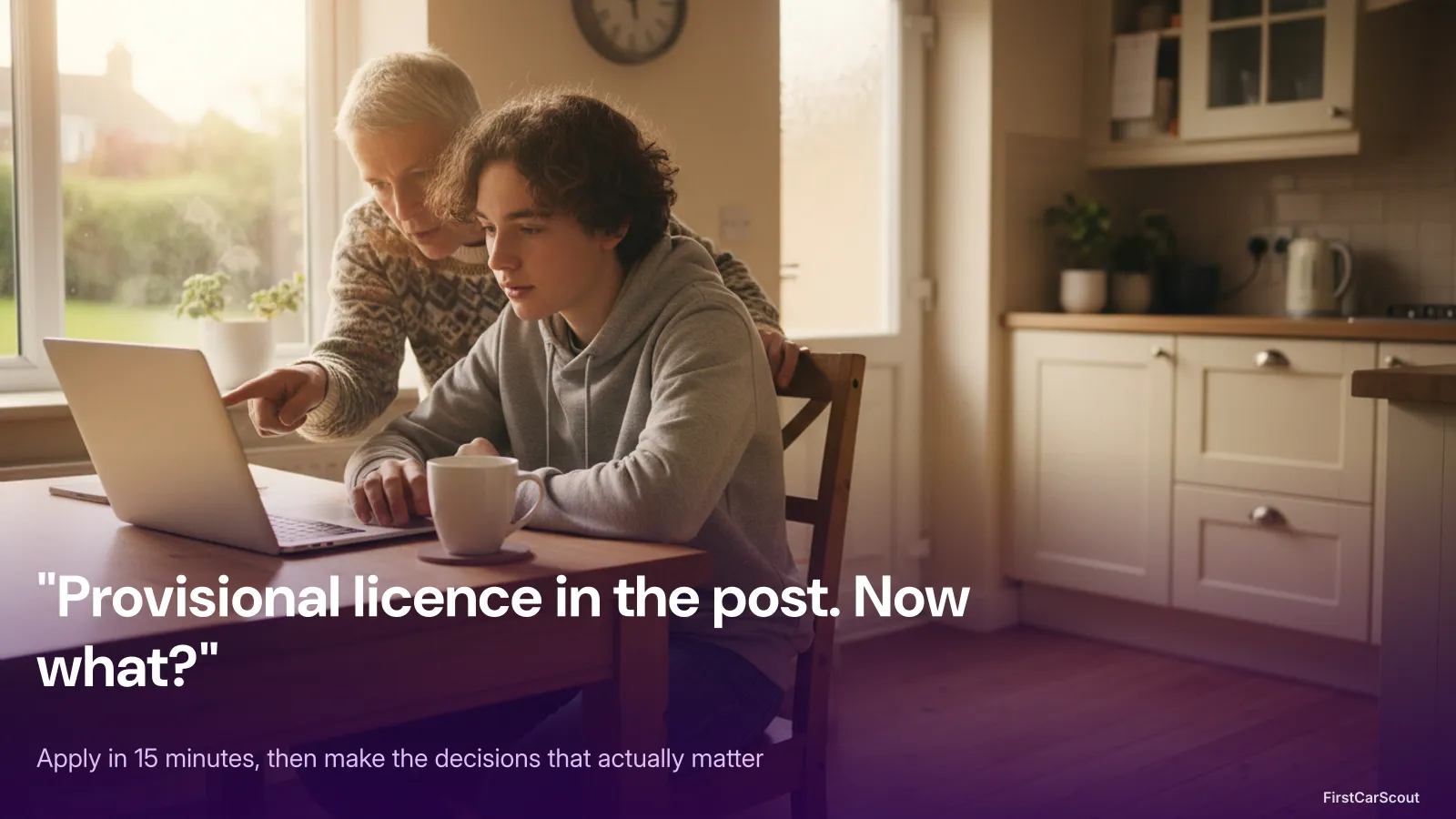
To apply for a first provisional driving licence in the UK, go to GOV.UK and complete the online application, which costs £34, once you are 15 years and 9 months or older. If you cannot apply online, you can apply by post with a D1 form from a Post Office for £43.
Before You Apply: The One Check That Saves You a Wasted Trip
Before you open a browser, run through this quickly:
- Age: You can apply from 15 years and 9 months. You cannot drive a car on a public road until you are 17 (or 16 if you receive the enhanced rate of the Personal Independence Payment mobility component).
- Residency: You must be entitled to live in Great Britain and have been resident here for at least 185 days in the last 12 months. England, Scotland and Wales only. Northern Ireland uses a separate system via nidirect.gov.uk.
- Eyesight: You must be able to read a standard number plate from 20 metres. Do this honestly. Applying and then failing an eyesight check at your first lesson wastes time and money.
- Identity: You will need a form of photo ID. A current or recently expired UK passport is the smoothest route. If you do not have one, read the section below.
That is the whole checklist. If you tick all four, you are ready.
How to Apply for a First Provisional Driving Licence: Online in 15 Minutes or by Post in Three Weeks
Online (recommended): Go to GOV.UK and search “Apply for your first provisional driving licence.” You will need a GOV.UK account, or you can create one during the process. The fee is £34, paid by card. You will need your UK passport number, your National Insurance number, and your addresses for the last three years.
Gather everything before you start, because the online form can time out if you leave it sitting. Apply only through GOV.UK: third-party sites charge you to fill in the same form, and the official service is the only place that does not add a fee on top.
No UK passport? You can still apply online if you have a valid non-UK passport and a current UK biometric residence permit. If you have neither, you must apply by post using a D1 form, available from any Post Office. The postal fee is £43, and the form asks for certified identity documents rather than a passport number. Delivery by post takes up to three weeks, compared to roughly one week for the online route in 2025.
The DVLA uses your passport photo if you apply online, so there is no separate photo submission needed for most applicants.
Common Reasons Applications Stall (and How to Fix Them Fast)
This is the section other guides skip entirely.
Identity verification delays: If the DVLA cannot automatically verify your identity against passport records (common with recently renewed or non-UK passports), they will write to request documents. Check your email and postal address carefully when applying, a typo here can add weeks.
Name and address mismatches: Your personal details need to match your ID exactly, including middle names. A small difference between the form and your passport is an easy way to trigger a manual check.
Recent address changes: The system asks for your last three years of addresses. A gap, an inconsistency, or a very recent move can trigger a manual review. Have your previous addresses ready before you start.
Expired passport used for ID: An expired UK passport is accepted online only if it expired within two years. Outside that window, use the postal D1 route with alternative ID.
Photo and signature: For postal applications, your photo must meet standard passport-style rules. A blurry or non-compliant photo is one of the most common reasons postal applications are returned.
If your application has not moved after three weeks online or four weeks by post, contact the DVLA directly rather than reapplying. Duplicate applications cause further delays.
While You Wait: Why the Provisional Is Also the Starting Gun on Your Running-Cost Research
Here is what almost no application guide tells you: the one or two weeks between applying and your licence arriving is the single best moment to start understanding how your car choice will affect what it costs to run.
Not after you have fallen in love with a specific car. Before.
As one new driver put it: “Just about to get my licence, will my dream car bankrupt my insurance?” That question is much easier to answer before you have an emotional attachment to an answer.
The thing most new drivers and parents discover too late is that engine size, trim level and insurance group matter far more than the make and model name. A Fiesta and a Fiesta are not the same insurance risk. A 1.0 in a base trim and a 1.0 in an ST-Line can sit several groups apart. One parent summarised the confusion well: “Older car or new Swift for cheaper 18-year-old insurance?” The answer depends on the exact version, not the badge.
Starting that research now costs nothing. Starting it after buying the wrong car can cost hundreds, sometimes thousands, over the first year alone. FirstCarScout is built precisely for this moment: it filters real UK listings by insurance group, reliability and running costs together, so you can see the full picture before you visit a single car. For a wider view of what the whole journey costs, see how much it costs to learn to drive in the UK, and run the total cost check before you fall for any car.
What Your Provisional Actually Unlocks (and What It Doesn’t)
Once your provisional licence arrives, here is what it genuinely allows:
- Start lessons with an approved driving instructor (ADI) or practise with a supervising driver aged 21 or over, who has held a full licence for at least three years.
- Apply for learner driver insurance, either as a named driver on someone else’s policy or on a standalone learner policy.
- Use it as photo ID in most everyday situations.
Here is what it does not do:
- It does not allow you to drive alone, ever, until you hold a full licence.
- You cannot legally drive on public roads as a learner until the licence has arrived, even with an instructor beside you.
- Holding a provisional without being insured on a vehicle builds no no-claims history at all. No-claims discount only accumulates on an active policy.
- It does not mean you are covered to drive any car. You need a specific insurance arrangement every time you drive.
Realistic expectation: the provisional is a starting point, not a finish line. The decisions you make in the weeks that follow, which car, which engine, which insurance approach, will shape what driving actually costs you for the next two or three years.
Frequently asked questions
How much does a first provisional driving licence cost in the UK?
Applying online through GOV.UK costs £34, paid by card. Applying by post with a D1 form costs £43. Fees can change, so confirm the current amount on GOV.UK before you pay.
How old do you have to be to apply for a provisional driving licence?
You can apply from 15 years and 9 months. You cannot drive a car on a public road until you are 17, or 16 if you receive the enhanced rate of the Personal Independence Payment mobility component.
How long does a provisional licence take to arrive?
Online applications arrive in roughly one week in 2025, and postal applications take up to three weeks. If nothing has arrived after three weeks online or four weeks by post, contact the DVLA rather than applying again.
Can I start driving lessons before my provisional licence arrives?
No. You cannot legally drive on public roads as a learner until the licence is in your hands, even with an approved instructor. Book lessons for once it has arrived.
Should I use a third-party site to apply?
No. GOV.UK is the official place to apply, and third-party sites charge you to complete the same form. Use the official service directly.