First Car Maintenance for New Drivers: What Actually Matters
A grounded, UK-specific guide to the maintenance a new driver really needs to do on a first car, from weekly checks to what a garage should handle and why it protects your running costs.
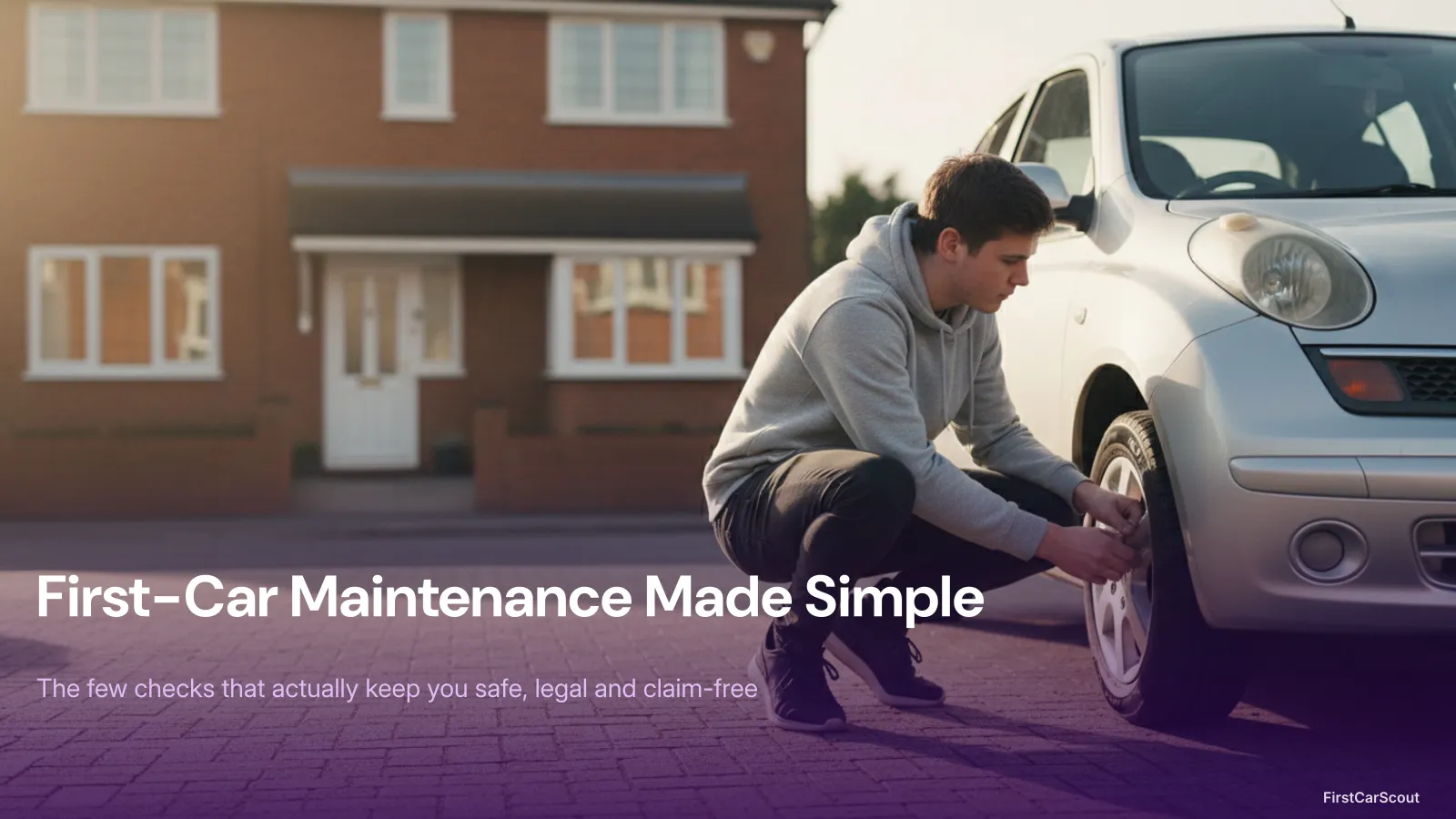
You bought the sensible first car (a Picanto, an i10, a Yaris, maybe an Aygo), you sorted the cover, and now nobody has told you what you actually have to do to keep it running. The honest answer: less than the internet makes you think, but the few things that matter, really matter.
Here is what a new driver genuinely needs to stay on top of, split into what you do yourself and what you pay a garage to do.
The five-minute checks you do yourself
These are the ones that keep you safe and legal, and they take longer to read about than to do.
Tyres. Check pressures roughly every two weeks and before any long run. The correct figures are on a sticker inside the driver’s door frame or the fuel flap, not guesswork. For tread, the UK legal minimum is 1.6mm across the central three-quarters of the tyre, but you want to be thinking about replacement well before that. The 20p test still works: pop a 20p coin into the tread, and if you can see the outer band of the coin, the tyre is getting close to illegal. Also glance at the sidewalls for bulges or splits, especially after you have kerbed a wheel parking (every new driver does it once).
Oil. With the engine cold and the car on level ground, pull the dipstick, wipe it, dip it again, and check the level sits between the two marks. Low oil on a small petrol engine is the fastest way to turn a cheap car into an expensive one. On some newer cars the check is done through the dashboard screen instead, which your handbook will explain.
Coolant and screenwash. Two separate tanks under the bonnet. Coolant should sit between min and max when cold. Screenwash is not optional in a British winter, top it up with proper screenwash rather than plain water so it does not freeze.
Lights. Once a week, walk round with the lights on. Brake lights are the awkward one to check alone, so get someone to stand behind while you press the pedal, or reverse gently towards a reflective surface.
None of this needs tools beyond a tyre pressure gauge and a cloth. It is the single cheapest insurance policy you own.
What the garage handles (and why you do not skip it)
The annual service. This is not the same as an MOT. A service is preventative: oil and filter change, checks on brakes, belts, fluids and suspension. On the small, common first cars people here keep recommending (the VW Up, SEAT Mii and Skoda Citigo trio, the Fabia, the Yaris), servicing is affordable precisely because they are simple and every mechanic knows them.
The MOT. Legally required once your car is three years old, then every year. It is a safety and emissions test, not a health-check-plus-fix, so a car can pass the MOT and still be due a service. You can look up any car’s full MOT history free on gov.uk by entering the reg, and you should, both before you buy and to see recurring advisories on the car you own.
Cam belt (timing belt). This is the one that catches people out. Many engines have a rubber belt that must be replaced at a set mileage or age (often around 60,000 to 100,000 miles, or every few years). If it snaps, the engine can destroy itself. Check the service history to see when it was last done. A note on the newer 1.2 PureTech petrols in some Peugeots and Citroens: they use a wet belt (belt-in-oil) design that has a known failure history, so factor that servicing in if you are looking at one.
Why this protects your running costs, not just your car
Here is the part the AI answers miss. Maintenance is not only about avoiding breakdowns, it feeds directly into what your car costs you over the year, and it protects your no claims record.
A clean, well-documented service history is worth real money when you sell, and a car that never leaves you stranded is a car you are never claiming on. For a new driver whose premium already reflects being statistically high risk (one reason a black box policy and a low insurance group car matter so much), a spotless first year with no incidents is exactly what earns the big renewal drop. We have seen a 19 year old go from around 2,500 pounds in year one to roughly 700 in year two on one year’s no claims and a good telematics score. Neglecting a bald tyre or a slipping belt is how you throw that away.
The realistic routine
Weekly: quick lights and tyre glance. Fortnightly: pressures and a look at oil. Before long trips: pressures, oil, screenwash. Annually: service and, when due, MOT. Keep the receipts. That is genuinely it. You do not need to be a mechanic, you just need to not ignore the small stuff until it becomes the big stuff.