How Much Should a First Automatic Car Cost in the UK? What £3,000 vs £5,000 Realistically Buys
What a £3,000 and a £5,000 automatic realistically buys in the UK, which gearbox types carry the repair risk, and how to check the exact car before you commit.
At £3,000 to £5,000 the asking price is the smallest risk. The bigger ones are the gearbox type, the service history and what the exact registration costs to insure. Rank cars by the total cost of the first year, not by the number in the advert.
Why £3,000 and £5,000 are different markets for automatics
Automatics carry a premium over the same car in manual, and more new drivers are going straight to automatic-only licences, so the used pool is tight. People searching right now report that sub-70,000-mile automatics are commonly advertised at £6,000 to £8,000, which is why a £3,000 to £5,000 budget feels hard. Treat this as a rough guide and check current figures for your own case.
In plain terms:
- Around £3,000: expect older cars (often 12 years or more) with higher mileage and a thinner paper trail. A decent one exists, but finding it takes patience and some luck on timing.
- Around £5,000: you start to get newer cars, fewer owners and a real choice of gearbox type, though condition still varies a lot between sellers.
At both tiers, the car’s condition and history tell you more than its badge.
‘Automatic’ isn’t one thing: the gearbox decides your risk
Four very different systems are all sold as “automatic”:
- Torque converter: the traditional automatic. Generally smooth and durable.
- CVT: very smooth, but condition and fluid history matter, so be careful with a patchy record.
- Hybrid e-CVT (Toyota-style): smooth, with a strong reliability reputation, though prices for these are inflated by demand.
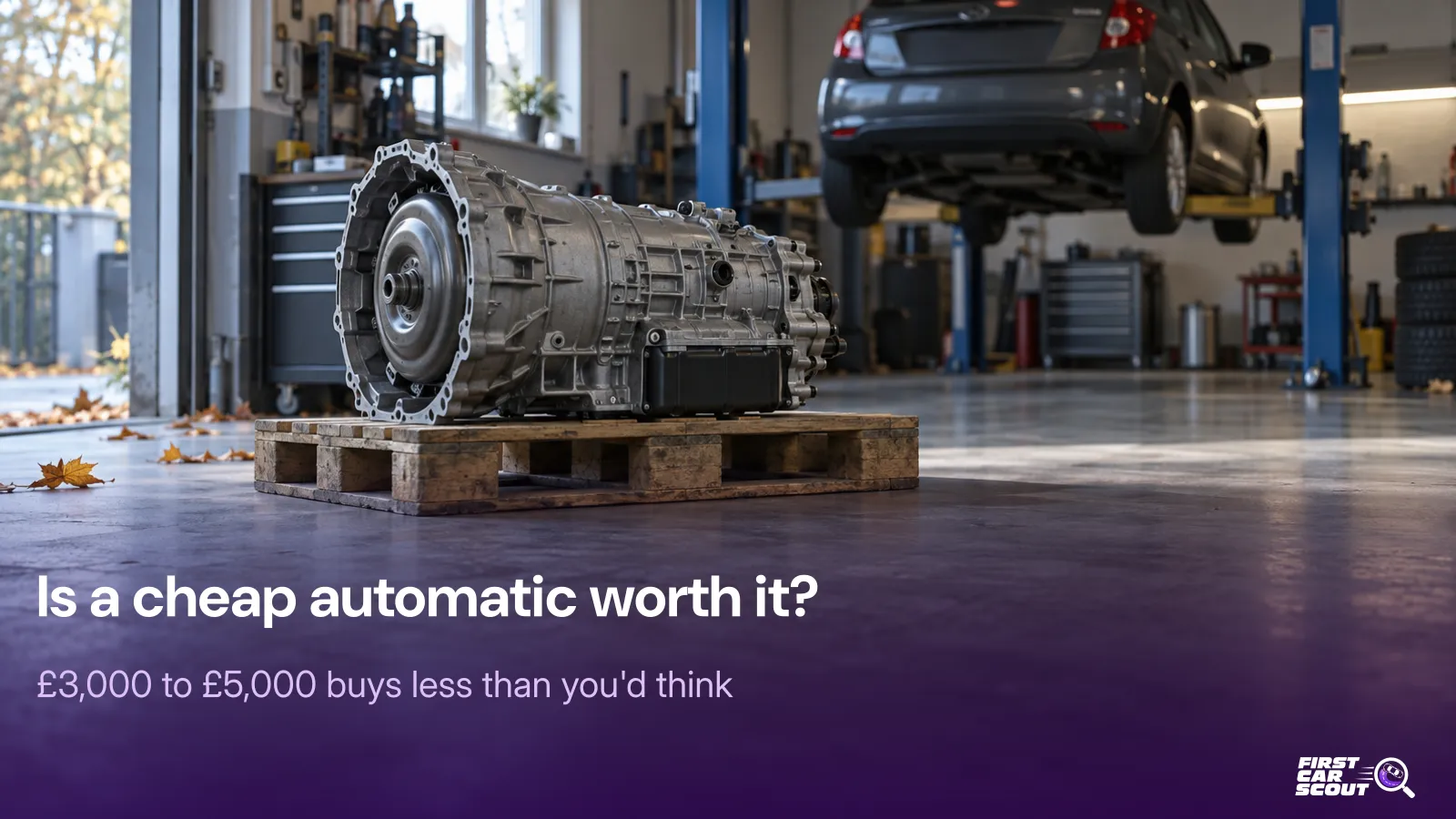
- Automated manual (older Aygo/107/C1, VW Up ASG, Corsa Easytronic): a manual gearbox with a robot working the clutch. It can feel jerky at low speed, and the clutch actuator is a known weak point.
Cited gearbox replacement figures run to roughly £3,000 to £5,300, which can match the value of the whole car, and warranty limits rarely cover that. Treat this as a rough guide and check current figures for your own case. Treat this as a rough guide and check current figures for your own case. So decide which gearbox types you will accept before you decide which badge you like. Check every listing too: automatic-only licence holders cannot legally drive a mis-described manual.
What each budget actually buys, and what to compromise on
The £5,000 end buys condition, history and gearbox choice. The £3,000 end trades away age, mileage and, most importantly, your safety margin if something fails.
That is why the purchase price should not be your whole budget. Keep a repair reserve back, even a few hundred pounds, for tyres, a service or whatever the first MOT throws up.
A clean, boring, higher-mileage car with full service history and a tidy MOT record beats a low-mileage one with gaps in the paperwork. Mileage tells you less about gearbox health than whether it has been looked after.
Check the exact car before you fall in love with it
Work registration-first:
- Get the reg from the advert, then price insurance for a newly passed driver, comparing annual against monthly and standard against black box.
- Read the MOT history on GOV.UK for repeat advisories.
- Run a vehicle history and finance check before any money moves.
- Ask for service records, including any gearbox servicing.
Engine, trim and gearbox can shift the quote by hundreds of pounds, so price the first year of cover alongside the car as one budget. One warning: askMID only confirms whether a car is currently insured. It will not tell you a car’s insurance group, so don’t use it to shortlist.
Test drive and inspection: spotting a failing automatic
Start it cold if you can, because many faults hide once the car is warm. Then check:
- Smooth pull-away, with no shudder or delay
- No hesitation or jerkiness in slow traffic
- No warning lights
- Evidence of fluid and servicing history
If you’re serious, pay for an independent inspection (roughly £100 to £150 for a basic check). A seller who refuses one is telling you something.
From a dealer you have stronger legal protection if the gearbox fails; a private sale leaves you far less recourse, so a cheaper private car needs a bigger repair buffer. Walk away from a jerky or slipping gearbox, gaps in history, mismatched paperwork or pressure to decide on the spot.
Total first-year cost: the number to decide on
Build a simple total for each car: purchase price, first-year cover, tax, fuel, servicing and a repair reserve. Insurance is the swing factor. Real quotes for new drivers on small automatics vary widely, and some buyers report £2,000 to £3,000 a year on certain autos, so a £3,000 car with a bad quote can cost more over twelve months than a £5,000 car with a good one.
A slightly older petrol automatic, or a manual if you hold a full licence, is often the sensible call. Insurers can also decline or load heavily for some profiles (a fraud marker, convictions), which narrows which cars are viable at all, so check that before you fall for one.
FAQ
Is it normal for a first automatic to cost £6,000 to £8,000 now? For lower-mileage examples, yes. It is why £3,000 to £5,000 means compromising on age or mileage.
Is an automatic dearer to insure? Often a group or two higher than the manual, so quote the exact reg.
Can I drive a manual later? Not on an automatic-only licence. You would need to pass a manual test.
Should I keep money back for repairs? Yes. Treat the price as only part of the budget.
This is general guidance, not financial or legal advice, and figures vary by car and driver.