How Much Does It Cost to Learn to Drive in the UK in 2026
A grounded 2026 breakdown of what it really costs to learn to drive in the UK, from lessons and test fees to the running costs that hit the moment you pass.
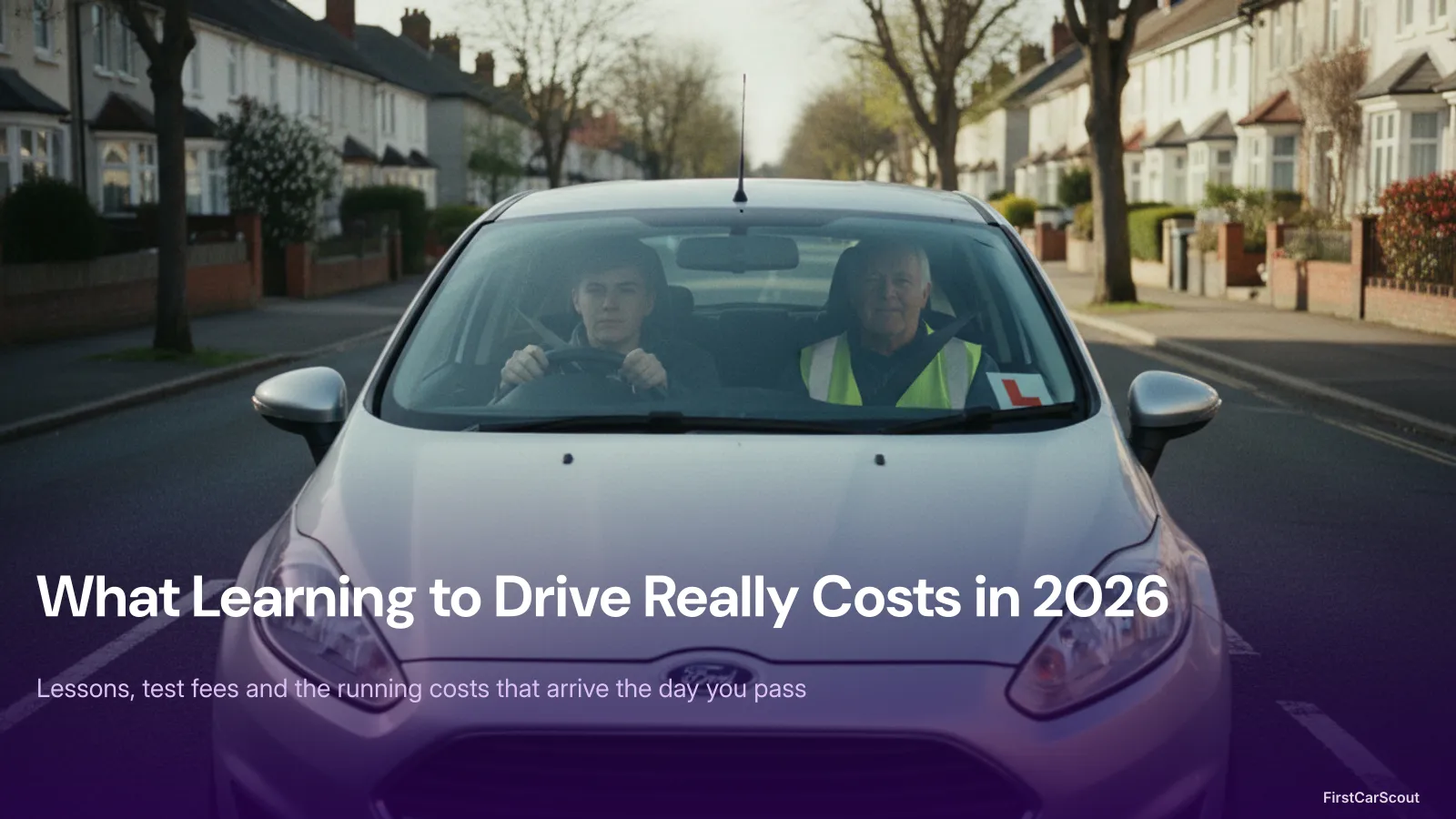
Learning to drive is one of the biggest single spends a young person (or a late starter) will make before they even own a car. The trouble is that the headline number, the bit everyone quotes, is only half the story. Below is a realistic 2026 breakdown, followed by the part most guides skip: what happens to your money the day after you pass.
The lessons: where most of your money goes
Private driving lessons are by far the biggest cost, and prices have crept up steadily. Across most of the UK in 2026 you should budget roughly £38 to £45 an hour, with London and the South East often £45 to £55 and some rural areas a little lower. These are typical figures, not guarantees, and instructors set their own rates.
The DVSA has long suggested that the average learner needs around 45 hours of professional lessons plus about 22 hours of private practice before they are test-ready. That is an average, not a target, and plenty of people need more.
Do the maths and it adds up fast. At £42 an hour, 45 hours is around £1,890. Block-booking (paying for 10 lessons up front, say) usually shaves a few pounds off the hourly rate, so it is worth asking. Intensive courses that cram the whole thing into a week or two are often quoted at £1,200 to £1,700 and can look like a saving, but you lose the spaced-out practice that helps most people actually pass.
Theory test, practical test and the small stuff
The official DVSA fees are the fixed, predictable part of the bill:
- Provisional licence: £34 applied for online through GOV.UK (£43 by post)
- Theory test: £23
- Practical driving test: £62 on a weekday, £75 on evenings, weekends and bank holidays
Never pay a third-party site more than these figures to book. Some private booking sites charge a markup for a service GOV.UK provides for the official price.
Then there are the extras that quietly add up. A theory revision app or book is usually £5 to £15. If your instructor’s car is not available, hiring one for the test itself is often £60 to £100 on top of the fee. And realistically, most people fail at least one test somewhere along the way, so budget for a resit fee (and a couple more lessons) rather than assuming a clean run.
The realistic total
Put it together and a typical UK learner in 2026 is looking at somewhere around £2,000 to £2,500 all in, spread over several months. Do it faster or need fewer lessons and you might come in under £1,800. Need more time behind the wheel, fail a test or two, and £2,800 is easy to reach. There is no single true number, only your number.
The cost nobody warns you about: the day you pass
Here is the bit the lesson-cost guides leave out. The moment you pass, the expensive part often begins, because a first car and its running costs usually dwarf what you spent learning.
We hear this constantly from newly qualified drivers. One 18-year-old told us they were thrilled to buy their first car, then found cover priced at around £600 a month because of the car they had chosen. A learner near Edinburgh with a £4,000 budget discovered typical “learner cars” like the Toyota Aygo being asked £6,000-plus purely because they are in demand. Passing your test does not end the spending, it changes what you are spending on.
The single biggest lever on your first-year premium is the car itself, and it is not always the one you would guess. Cars in insurance groups 1 to 5 (think VW Up, SEAT Mii, Skoda Citigo, Hyundai i10, Kia Picanto, Toyota Aygo) keep the numbers sensible. A turbo, a sporty badge or a bigger engine gets priced hard against a new driver.
A few things worth doing before you even book that final test:
- Run a real reg through a comparison site to see what cover actually costs. It takes five minutes and can save hundreds.
- Look at a black box (telematics) policy. For young and new drivers this is often the biggest single saving, and one driver we heard from saw their premium fall from £2,500 to £700 after a year of good box scores.
- Treat the car price and the first-year premium as one combined budget, not two separate decisions.
The honest summary
Learning to drive in 2026 will most likely cost you £2,000 to £2,500 by the time you have a full licence in hand. The test fees are fixed, the lessons are the variable that matters, and block-booking plus honest private practice is how you keep the total sensible.
But plan for what comes next. The learning bill is a one-off. The car and its running costs arrive right behind it, and for a new driver those are the numbers that really bite. Budget for both from the start and you will avoid the nasty surprise so many people hit the week they pass.